Nvidia is once again in the center of the global competition for artificial intelligence. This time, the company is having to rethink how many of its powerful H200 AI processors it should make because of rising demand from China. According to people familiar with the discussions, the U.S. chipmaker has warned Chinese clients that it is actively investigating an increase in production capacity after inbound orders beyond what it can currently offer. The move underscores how swiftly China’s thirst for powerful AI gear is expanding, even with political scrutiny and export limits.
The newfound interest in the H200 follows a major policy signal from Washington. Earlier this week, President Donald Trump indicated that the U.S. government will let Nvidia send the H200 processor, its second-fastest AI chip, to China as long as a 25% charge is paid on the sales. For Chinese IT firms that have been denied of access to cutting-edge AI hardware, the statement was seen as a narrow but valuable opening. Interest shot up almost right away.
One source added that Chinese companies’ demand has been strong enough to have Nvidia look into more manufacturing capacity. They also said that the talks are still secret. This is not a little change. The H200 is a high-performance microprocessor that is utilized in data centers to power everything from recommendation engines to generative AI models. It is built for training and inference on a big scale. Increasing production is costly, takes a lot of time, and is important for strategy, especially when it means shipping to China.
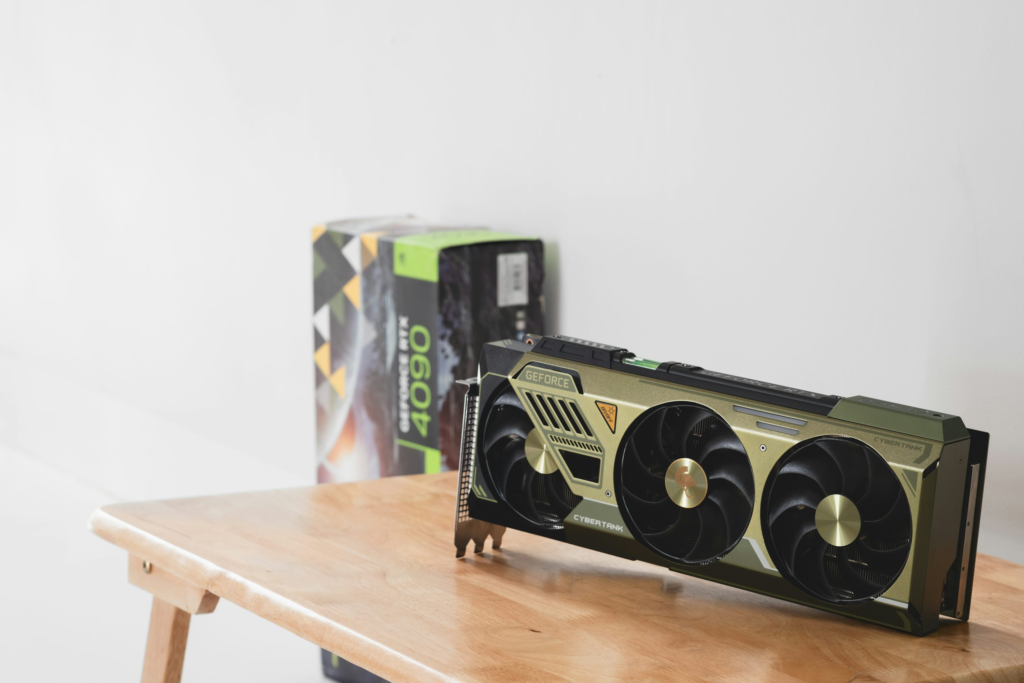
Nvidia, on the other hand, has tried to calm other markets by saying that any supply going to China would not hurt them. After the story emerged, a business spokeswoman said, “We are managing our supply chain to ensure that licensed sales of the H200 to authorized customers in China will have no impact on our ability to supply customers in the United States.” The statement shows how Nvidia is carefully balancing its goals: it wants to grow its business while still following U.S. laws and keeping good connections with its primary customers in other countries.
Some of China’s biggest tech businesses have already made their plans apparent. After the policy was announced, companies like Alibaba and ByteDance are said to have approached Nvidia to show interest in making big orders for the H200. For these businesses, getting sophisticated processors isn’t just about making things work better. It’s about being competitive in an environment where AI is driving things and computing power is becoming more and more important in determining who can innovate the fastest.
Still, interest on the corporate side has not translated into immediate approvals. The Chinese government hasn’t officially approved the acquisition of the H200 yet, so negotiations are still up in the air. Sources said that Chinese officials conducted emergency meetings to talk over whether the chips should be let into the nation and, if so, under what terms. There is still no definitive decision, which shows how complicated the politics are around sophisticated semiconductors.
It’s not unexpected that China is hesitant. The country has worked hard in the last few years to rely less on foreign technology, especially in areas that are critical for national security, like AI and semiconductors. It is believed that officials are thinking about making Chinese buyers buy Nvidia’s H200 along with promises to use chips made in China. This move would fit well with Beijing’s larger goal of growing its own AI ecosystem while still getting some benefits from Nvidia’s technological superiority.
Supply problems make things much more complicated. Right now, just a small number of H200s are being made. Nvidia’s manufacturing efforts are mainly centered on its most sophisticated Blackwell chips and the upcoming Rubin series, which are likely to establish new benchmarks for AI performance. With that in mind, it takes careful planning to give extra resources to an older processor like the H200, which is nonetheless powerful.
People who know about the talks said that Chinese clients have been pushing Nvidia for more information about supply levels. As part of its briefings, Nvidia has offered general recommendations on current availability, though without providing particular quantities. For firms contemplating large-scale AI deployments, even imprecise timetables can make a difference in investment and infrastructure decisions.
From a business point of view, this event shows a bigger truth about the state of AI today. Not only is demand expanding, but it is growing faster than supply chains can keep up with. There are problems with fabrication capacity, improved packaging, and getting to cutting-edge production nodes. When you bring in geopolitical issues, the problem gets considerably worse.
There is also a strategic dimension for Nvidia. China is still one of the biggest markets for AI infrastructure in the world, and staying there, even with constraints, is important for the long run. At the same time, the corporation must negotiate U.S. policy expectations and avoid moves that could spark greater regulatory tightening. Increasing H200 output expressly for China could be considered as sensible, but it also risks receiving scrutiny if political winds shift again.
The stakes are just as high for Chinese companies. While local chipmakers are making progress, they still lag behind Nvidia in performance and ecosystem maturity. Getting H200 chips could help in the short term, but there may be conditions that come with them from both Washington and Beijing. That tension is similar to what is happening in China’s tech sector as a whole, where companies are striving to go forward quickly while dealing with more and more restrictions.
As of now, Nvidia’s evaluation of enhanced H200 production is just that, an evaluation. There hasn’t been a definitive decision made public yet, and a lot hinges on getting permission from the government on both sides of the Pacific. It is evident, though, that demand for AI computing in China is not going down, and even little openings can cause big changes in how companies and governments act.
There are still a lot of questions that need to be answered. Will the Chinese government allow H200 imports? If so, what requirements will they have to meet? Can Nvidia make more chips without messing up its plans for the next generation of chips? And maybe most crucially, does this event mean that U.S.-China tech relations are becoming more flexible, or is it just a small exception in an otherwise rigid environment? Nvidia’s H200 is currently at the crossroads of innovation, policy, and global rivalry. This shows that in the age of AI, processors are never just chips.