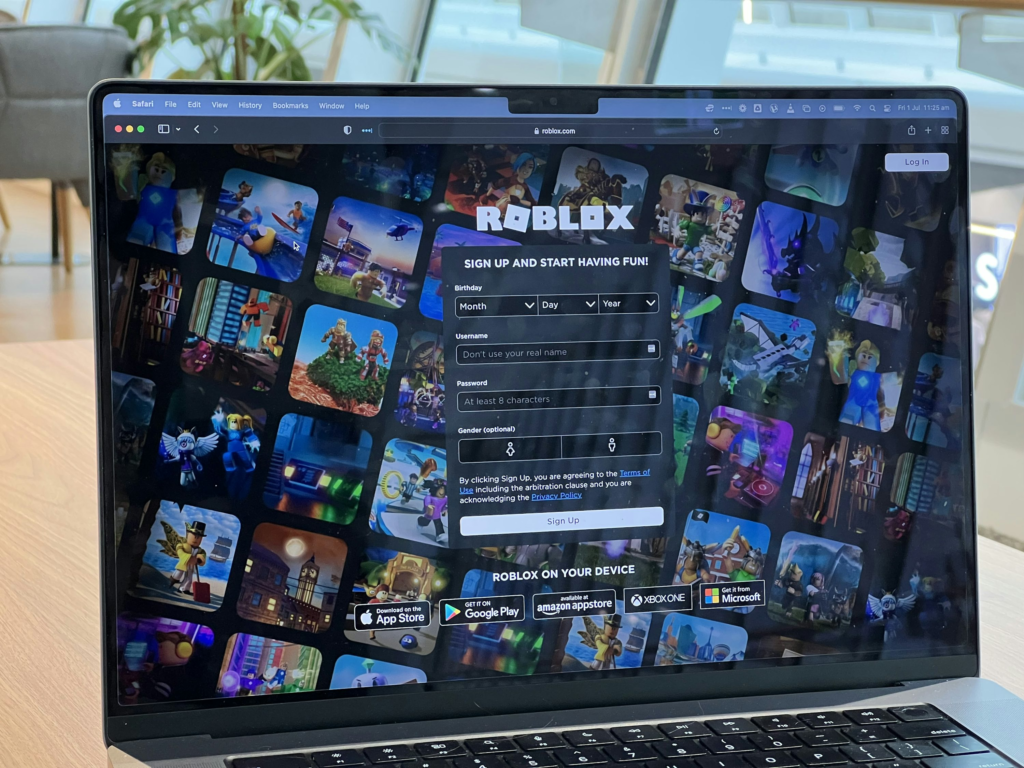
The Russian ban on Roblox has gradually turned into something bigger than a fight over a kids’ game site. What began as a regulatory decision has now uncovered deeper conflicts concerning censorship, digital freedom, child protection, and the limits of state authority in an increasingly online world. In a country where public rallies are rare, the sight of regular people assembling in the snow to protest the ban has gotten a lot of attention outside of the gaming sector.
In the Siberian city of Tomsk, which is about 3,000 kilometers east of Moscow, a tiny but important protest took place in mid-December. A few dozen people braved the cold to protest the Russian ban on Roblox, a U.S.-based online gaming company that kids and teens use a lot. The event took place in Vladimir Vysotsky Park, where attendees held handmade signs expressing dissatisfaction with what they consider as another step toward digital isolation. Though modest in scale, the demonstration stood out in wartime Russia, where public criticism has been increasingly limited.
Censorship has risen substantially in Russia over the past few years, particularly with the outbreak of the crisis in Ukraine. Major Western social media platforms including Snapchat, Facebook, Instagram, WhatsApp, and YouTube have been blocked or significantly limited. Instead, Russian officials push for state-aligned media and domestic platforms to keep what they call “information sovereignty.” Against this backdrop, the Russian ban on Roblox fits with a broader pattern of tighter control over online spaces, especially those accessible to young users.
Russia’s communications watchdog, Roskomnadzor, announced the restriction on December 3, noting that Roblox was “rife with inappropriate content that can negatively impact the spiritual and moral development of children”. This justification echoes rhetoric typically used by Russian regulators when banning international digital services. When kids are involved, officials often say that these kinds of judgments are for their protection. This makes the state look like a custodian of moral principles in the digital era.
At the Tomsk rally, attendees displayed signs reading “Hands off Roblox” and “Roblox is the victim of the digital Iron Curtain”. One placard delivered a harsh message: “Bans and blocks are all you are able to do”. Pictures from the event showed about 25 individuals standing in a loose circle on the snow-covered ground, calmly holding their signs instead of chanting or marching. The constrained character of the gathering reflected both the importance of the subject for those engaged and the caution that accompanies any public protest in today’s Russia.
The Russian ban on Roblox has generated debate across the country, reaching well beyond the protest in Tomsk. Parents, teachers, digital rights groups, and teenage users themselves have chimed in on problems of internet safety, censorship effectiveness, and technical independence. Some parents favor the ban because they are worried about improper information, while others say that blocking is a blunt tool that doesn’t solve the problems of supervision and digital literacy.
One common argument centers on the viability of censorship in a fully digitalized society. Many Russians commonly utilize virtual private networks to access prohibited platforms, making enforcement unreliable at best. Teenagers, in particular, are generally proficient at evading limits within minutes. Some young Russians are questioning the rationale of a prohibition that is so easy to get around, while others are wondering why the government hasn’t put more money into making enticing domestic alternatives to banned foreign platforms.
At the same time, worries about child safety are not fully discounted. Some Russian parents and teachers have indicated they are worried that Roblox lets kids see sexual content or talk to adults who might want to hurt them. These worries parallel conversations in many nations, as parents struggle to balance the creative and social benefits of internet platforms with the risks they can bring to youngsters. Roblox itself has under scrutiny globally, and it has already been banned in places such as Iraq and Turkey over fears that predators could exploit the platform to abuse children.
After Russia banned Roblox, the company, which is based in San Mateo, California, did not react right away to demands for comment. When the block was announced, however, the business reiterated that it has “a deep commitment to safety” and employs “rigorous built-in protections to help keep users safe”. Roblox, like many other global digital companies, puts a lot of emphasis on moderating tools, parental controls, and community norms. Critics say that enforcement can be inconsistent because the platform is so big and user-generated.
Russian officials defend the restriction as part of a broader effort to counter what they characterize as a “information war” launched by Western powers. In government narratives, foreign digital platforms are often presented as transmitters of “decadent” Western culture that undermines traditional Russian values. From this point of view, limiting access isn’t only about keeping kids safe; it’s also about keeping cultural identity and national security safe online.
But the quiet protest in Tomsk shows that not everyone agrees with this narrative. Some people in Russia see the country’s ban on Roblox as a sign of a widening digital gap between Russia and the rest of the globe. They think it limits choice and stifles creativity instead of safeguarding users. Roblox is not simply a game to many children; it is a platform for construction, coding, and social engagement. Removing access without presenting convincing alternatives can feel less like protection and more like deprivation.
The experience also leaves us with doubts about what will happen to internet governance in Russia in the future. As prohibitions increase, public dissatisfaction may continue to show in modest but telling ways. Most Russians follow the rules or find ways to get around them without making a fuss. But events like the Tomsk protest show that there is a lot of anger, especially among younger people who have grown up online.