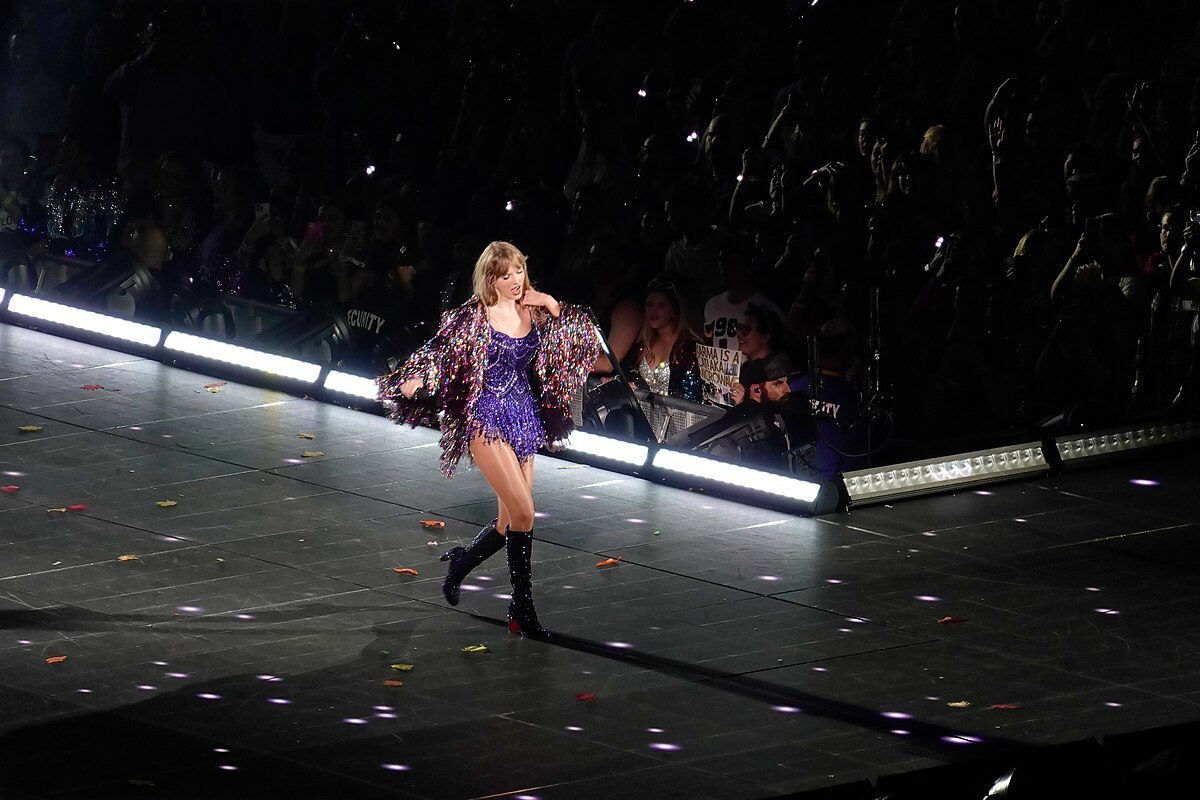
When Taylor Swift looks back on the monumental success of her Eras Tour, the story is not just about sold-out stadiums, record-breaking ticket sales, or viral moments online. Behind the show are a lot of careful creative choices, friendships, and gut feelings that made the tour become the immersive experience audiences saw all across the world. One of the most unexpected yet meaningful influences came from actress Emma Stone, whose recommendation quietly helped define the choreography and storytelling that made the Eras Tour feel cinematic rather than conventional.
In her docu-series Taylor Swift: The Eras Tour | The End of an Era, Swift recently talked about this link. The show gives viewers a rare glimpse at how the tour came together behind the scenes. In one episode, a brief clip went viral because it showed how important Stone was to Swift’s creative process. It was not a flashy collaboration or a public endorsement, but a trusted conversation between two longtime friends who understand performance, movement, and emotional storytelling.
The Eras Tour was never meant to be just another concert. From the beginning, Swift envisioned it as a living archive of her musical journey, one that would allow fans to move through different phases of her career in a single night. To reach that goal, they needed more than just good singing and spectacular effects. It needed choreography that could move smoothly between different times, moods, and stories without disturbing the emotional flow. This is where Emma Stone’s influence became significant.
In the second episode of the docu-series, Swift explains how she reached out to Stone while shaping one of the tour’s segments. Stone, known for her physically expressive performances and dance-heavy roles, especially in films like La La Land, had firsthand experience working with top-tier choreographers who understand storytelling through movement. Swift trusted that perspective and asked for a recommendation that could match her vision.
Reflecting on that moment, Swift said, “With choreography, I asked one of my friends, Emma Stone, who’s done a lot of work in dance in her films, ‘Who have you worked with that you would recommend for this?’ She’s like, ‘There’s only one person that needs to be on your list, and it’s Mandy Moore.’” The certainty in Stone’s response clearly resonated with Swift, who values collaborators that come highly recommended by people she trusts.
Mandy Moore, the choreographer Stone referred, was already respected within the film and television industry for her work on projects that demanded emotional precision rather than spectacle alone. While Moore had not built her career around large-scale concert tours, her strength lay in translating music into visual narratives. For Swift, whose songwriting is deeply cinematic and detail-driven, this alignment mattered more than traditional tour experience.
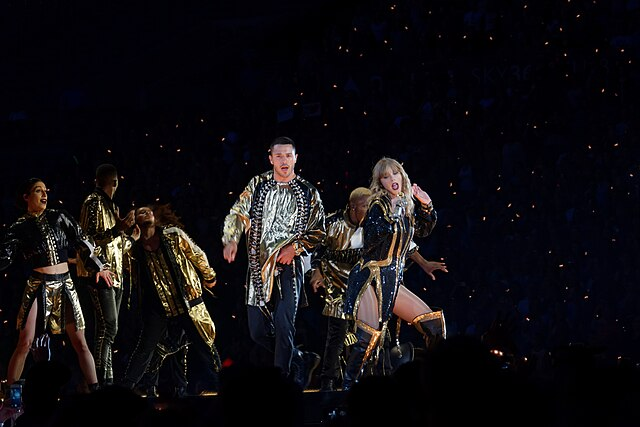
Acting on Stone’s suggestion, Swift brought Moore on board to choreograph select segments of the Eras Tour. Moore went on to collaborate closely with Swift and a group of fifteen dancers, crafting routines that felt intimate even in massive stadium settings. The choreography did not overpower the music. Instead, it supported it, allowing fans to feel the emotional shifts between albums, characters, and eras without needing elaborate explanations.
The tour, which began in March 2023 and concluded in December 2024, demanded extraordinary physical and emotional stamina from everyone involved. Swift’s decision to trust her instincts, and Stone’s recommendation, proved essential in maintaining coherence across a show that spanned more than three hours and covered over a decade of music. Each movement, formation, and transition felt intentional, reinforcing the sense that the Eras Tour was telling a story rather than simply performing a setlist.
Mandy Moore also appears in the docu-series, offering insight into her own experience working with Swift. She admits that she initially approached the project with some hesitation, aware that musical tours operate very differently from film productions. Despite this, she committed immediately, driven by a strong creative connection with Swift. Moore shared that although she was wary due to her limited experience with large-scale tours, she said yes right away, noting how she and Swift “clicked.”
That creative chemistry became evident on stage. Moore’s approach emphasized subtlety, body language, and emotional cues rather than rigid, high-energy routines throughout. This allowed Swift to remain at the center of the performance as a storyteller, not just a pop star executing choreography. Fans often remarked that the show felt deeply personal despite its scale, a balance that is difficult to achieve without thoughtful choreography.
What makes this collaboration particularly compelling is how organic it was. There was no formal audition process, no industry pressure, and no trend-driven decision-making. It began with a genuine question between friends and a recommendation rooted in professional respect. Emma Stone did not attempt to shape the tour herself, yet her insight helped Swift find a collaborator who understood her artistic language.
The Eras Tour has since been described as a cultural milestone, influencing how artists approach legacy performances and long-form concert storytelling. While many factors contributed to its success, the choreography stands out as one of its most defining elements. It served the music, respected the audience, and enhanced the emotional arc of the show without distracting from Swift’s presence.