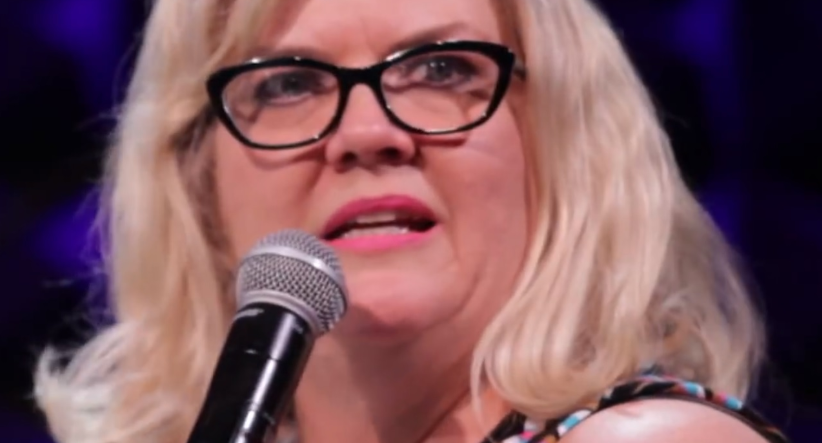
Actor and writer Paula Pell, best known for her work on 30 Rock and her voice roles in films such as Inside Out and Riley’s First Date, says the upcoming movie The Cat in the Hat offers a fun and sweet story in which her character undergoes a meaningful transformation. Based on Dr Seuss’s popular children’s book of the same name, the film casts Pell as Patty, a strict landlady who rents a home to Carmen and her kids and who holds a firm belief that the best-lived life is one that follows strict rules, including a ban on pets. It is a role that places her in direct opposition to the anarchic spirit the Cat represents, and Pell spoke about the pleasure of playing someone who appears to be an adversary before revealing a softer and more open side. In an interview transcript shared by Warner Bros, she explained what drew her to the part. “I think the story is really fun and sweet, and the characters are well drawn, no pun intended. I love playing a person who seems like an enemy but who goes through a transformation like Patty does,” the actor said.
Pell’s career has spanned several distinct phases, from her years as a writer on the long-running sketch comedy show Saturday Night Live to her acting credits in series such as 30 Rock and her increasingly busy work as a voice performer. That background in sketch comedy has given her an instinct for characters who are heightened but recognizably human, and Patty fits that mold comfortably. Describing her character as a real pain in their patoots, Pell shared that she developed the voice for the role by drawing on real-life inspirations from the many funny yet difficult landlords and landladies she has encountered over the years. It is a technique that voice actors often describe, the practice of anchoring an exaggerated performance in specific memories of real people, and it lends Patty a texture that a purely invented voice might lack. The character may be an obstacle in the story, but she is an obstacle with a recognizable lineage.
Pell also recalled growing up with the works of Dr Seuss, noting that Hop on Pop was one of the first books she learned to read. That detail matters more than it might seem. For a performer stepping into a Dr Seuss adaptation, there is a connection to childhood that predates the professional assignment, a sense of the source material as something personally formative rather than merely a property to be interpreted. The film expands beyond the original setting of the book, and Pell said she loved the idea of travelling to unknown places and returning home, a description that captures the emotional arc that animated so many of Seuss’s stories. The imaginative world of the movie is larger than the pages it draws from, and that expansion gave the cast room to build characters with histories and motivations rather than simply illustrating a familiar tale.
The actor was generous in her praise of the film’s directors, Erica Rivinoja and Alessandro Carloni, describing how they helped her improvise and form her own interpretations of the character. “I enjoy the process of directors like Erica and Alessandro allowing me to improvise but also trying many different interpretations of the written word with their direction,” she said. That collaborative approach is characteristic of the better animated productions, where voice work is treated as a genuinely creative contribution rather than a recitation of lines, and Pell’s background as a writer makes her particularly well suited to a process that rewards invention within a framework. She has spent much of her career in rooms where jokes are built and rebuilt, and that experience translates naturally into a recording booth where multiple readings of the same line are not merely tolerated but encouraged.
Asked about the enduring appeal of The Cat in the Hat, Pell offered an answer that reached beyond the specific audience of children. “I think we are living in a world where not just children, but all humans are looking for someone to appear with joy and the invitation for adventurous shenanigans. We need more joy to counteract our world more than ever these days,” she said. It is a sentiment that many people involved in family entertainment express, but coming from Pell it carries a particular weight, given how often her comedy has operated in a register of affectionate anarchy. The Cat, as a character, is chaos with a grin, an invitation to break the rules and see what happens. Patty, by contrast, is the voice insisting that rules exist for good reason. The tension between the two is the engine of the story, and the resolution of that tension is what Pell describes as a transformation.
The voice cast assembled around her includes Bill Hader, Matt Berry, Quinta Brunson, Xochitl Gomez, Giancarlo Esposito and America Ferrera, a lineup that suggests a film aiming for broad appeal across generations. Whether the movie captures the peculiar, slightly unsettling charm that made Dr Seuss’s work endure is a question that audiences will answer for themselves. What seems clear from Pell’s account is that the people making it approached the material with affection and a willingness to expand rather than merely reproduce. In an era when adaptations of beloved children’s books often arrive weighed down by the obligation to be faithful, that willingness is itself a kind of shenanigan, and perhaps a welcome one. The transformation Pell speaks of belongs to her character, but it also describes what any adaptation of a classic must attempt, and whether it succeeds will depend on whether the joy she describes makes it to the screen intact.