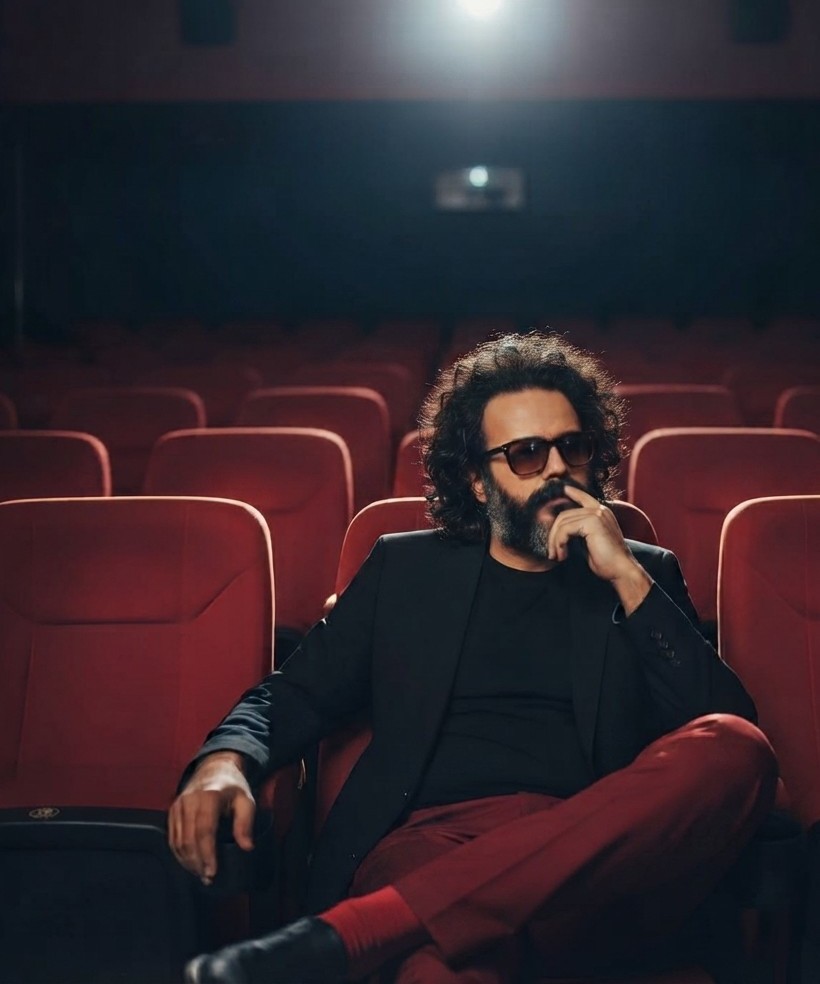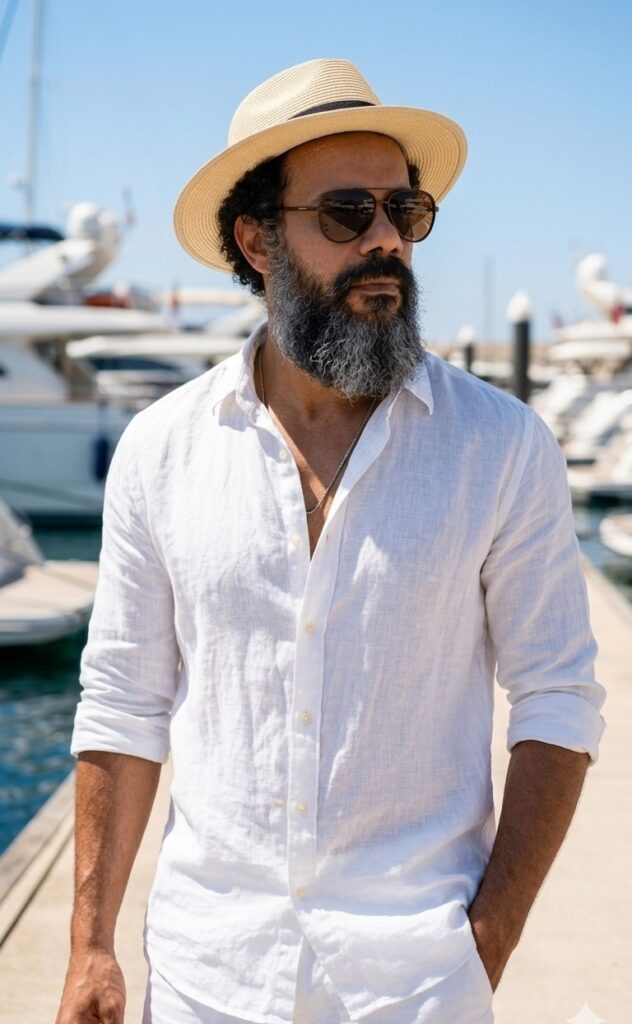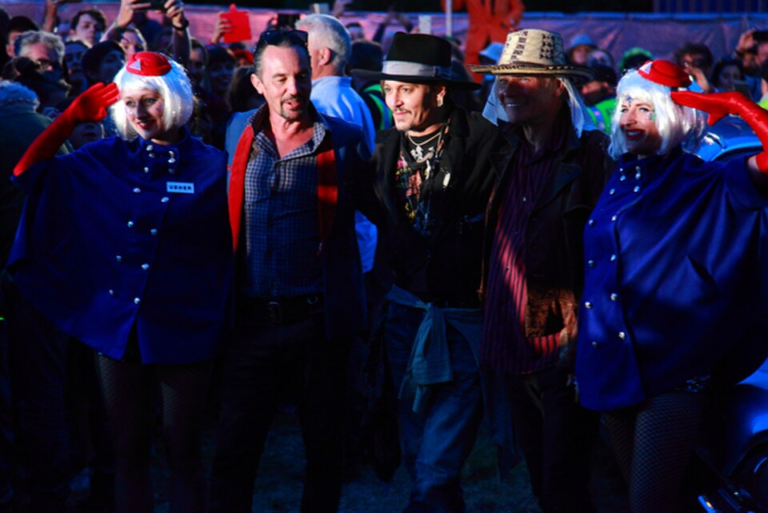
Egyptian film director and screenwriter Mahmoud Mahmoud reflects on his journey from Egypt to life abroad, his participation in international film festivals and juries, and the challenges of making independent films with limited resources. He discusses his feature film project MOSHA, his ambition to work with writers from Egypt and beyond, and the personal cost of circumstances that are not always within our control.
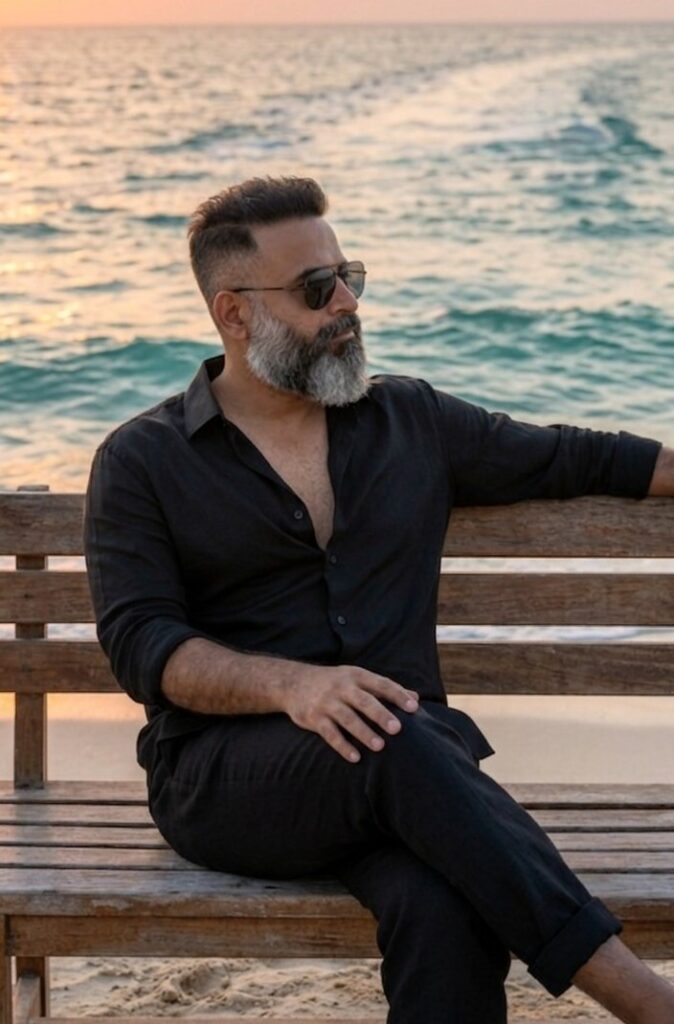
In this interview, Mahmoud Mahmoud speaks about cinema as both an art form and a human responsibility. While expressing pride in his Egyptian identity and international experiences, he raises questions about unrealized film projects, the responsibilities of producers and cultural institutions, and the need to create meaningful opportunities for filmmakers working both inside and outside Egypt.
1. From Egypt to international film festivals and jury panels, how do you view your journey today? Do you feel your presence abroad is matched by your presence within Egypt?
I do not like to measure my career by the number of appearances or participations. For me, cinema has never been about collecting titles or recognition. It has always been an ongoing attempt to understand human beings and express something about them through images.
I value my participation in international film festivals and jury panels, and every opportunity that has allowed me to engage with different cultures and cinematic traditions. The real value of these experiences lies in how they deepen an artist’s understanding and strengthen their ability to make better films.
Yet there is a question that sometimes stays with me: How can an Egyptian director participate in international cinematic events and artistic discussions abroad, while the opportunity to bring a feature film into production in his own country remains so difficult to reach?
I do not believe that international recognition automatically entitles anyone to production opportunities. But it does raise an important question about how Egypt can benefit from the experience of its filmmakers, both at home and abroad.
I hope to see stronger connections between Egyptian film institutions and Egyptian directors living overseas, with those connections developing into actual projects and professional collaborations.
I carry Egypt with me into every cinematic experience, but I also hope to find, within Egypt, the space to turn everything I have learned and dreamed of into films.
2. You have directed films such as Who Hugs the Sea, Casting Youssef Chahine, and Abdel-Wadoud. Was experimental cinema a deliberate artistic choice, or did limited budgets and production resources push you in that direction?
Experimental cinema is an artistic choice I genuinely value. It allows filmmakers to explore new forms of expression beyond established conventions. But I do not want to romanticize the realities of independent filmmaking.
There is a significant difference between choosing a visual approach because you believe in it and being forced to change your artistic decisions because of financial limitations, restricted locations, equipment, or shooting schedules.
In independent cinema, every minute of filming can become a financial decision. A director may have to reconstruct entire scenes simply to make them possible. Sometimes the challenge is not creating an image, but protecting the original artistic vision from the circumstances surrounding it.
These experiences taught me a great deal about working with limited resources. However, they should not define the limits of my ambitions.
One of the mistakes we sometimes make is judging a director’s capabilities by the production scale of previous films, without considering the circumstances under which those films were made.
I am proud of my previous work. But I want to make films with broader visual and production possibilities, supported by a professional structure that gives every creative element the attention it deserves.
It is painful when an artist’s ability to make a film with limited resources becomes the very reason they are expected to continue working with those same limitations for the rest of their career.
A director should not have to spend an entire lifetime proving that they can overcome obstacles. They should also have the opportunity to work in conditions that allow them to focus on creativity itself.
3. Your feature film MOSHA appears to represent an important transition in your career. What makes it different, and is it intended for film festivals or for a wider audience as well?
MOSHA is a project that means a great deal to me. I see it as an important step in the evolution of my vision as both a director and screenwriter.
It is a feature film with a distinctive cinematic world, bringing together fantasy, human heritage, and reality through a dramatic and visual approach that I hope will have its own identity.
I prefer not to reveal the details of the story at this stage. I believe that discovery is an essential part of the viewing experience, and I do not want to reduce the film’s world to a few lines before audiences have the opportunity to encounter it.
What I can say is that I am not making MOSHA exclusively for film festival audiences.
I believe it has the potential to reach different groups of viewers, including those who enjoy suspense, visual storytelling, and emotionally engaging narratives, as well as those who appreciate cinema with deeper intellectual and human dimensions.
I think we make a mistake when we assume that an unconventional film cannot appeal to a broad audience, or that commercially accessible cinema must compromise its artistic value.
In terms of development, I have completed the screenplay and dialogue, treatment, director’s vision, character book, visual concept, Director’s Look Book, Mood Board, and the project’s human and cultural value documentation.
We are therefore not discussing an initial idea waiting to be written. We are discussing a project that has reached an advanced stage of creative development and is ready to move toward production planning with an experienced production company.
The nature of the film also allows for collaboration with actors of different nationalities and offers production companies the opportunity to explore multiple distribution markets.
I do not want audiences to watch MOSHA simply because it is different. I want them to discover that its originality can itself become a source of excitement, enjoyment, and a cinematic experience worth having.
4. If MOSHA has reached such an advanced stage of development, why has it not entered production? Do you believe producers share responsibility for promising film projects that never reach the screen?
First, we need to distinguish between having a creatively developed film project and having the production resources required to bring it to life.
I have completed the creative development of MOSHA in my capacity as its writer and director. However, filmmaking requires a production company with the experience and resources necessary for planning, financing, execution, and distribution.
I am not presenting myself as a producer, nor am I seeking financing for a production share of my own.
I am presenting a creatively developed feature film project and looking for a production company that believes in its artistic and commercial potential and can take responsibility for bringing it to the screen.
A production company may choose to produce the film independently or collaborate with other production companies in Egypt or internationally, depending on the project’s requirements.
What I am seeking is not financial support motivated by sympathy, but a clear professional relationship between a director and a producer, based on confidence in the project, careful evaluation, and a shared commitment to making the film.
But the question that concerns me goes beyond MOSHA: How many potentially valuable film projects have never reached the screen because their creators could not reach the right people?
Do we have sufficiently accessible mechanisms through which producers can discover and evaluate independent projects beyond established names and personal connections?
I have great respect for producers. I understand the financial risks and responsibilities they carry.
However, I believe that a distinguished producer is not simply someone who finances an obviously promising project, but someone who can recognize and carefully assess a new opportunity before its potential becomes apparent to everyone.
I am not asking anyone to take financial risks without proper evaluation. I hope there can be more opportunities for reading, discussion, and development before projects are dismissed.
Sometimes we lose films simply because we never gave ourselves enough time to discover their value.
And that loss may affect not only the filmmaker, but also audiences, the industry, and the artistic and economic opportunities those films could have created.
5. Do you believe Egyptian cinema provides enough opportunities for independent directors? Have personal connections and established names become more influential than the quality of the projects themselves?
I prefer not to generalize. Egypt has an extraordinary cinematic history, and there are producers, directors, and artists who have made important contributions to the industry.
But this does not mean we should ignore the genuine challenges facing independent filmmakers, particularly when they attempt to move from short or experimental films into feature filmmaking.
Sometimes a director needs an extensive network of personal connections simply to reach someone willing to read a project, when the project’s quality and the filmmaker’s seriousness should be the starting point of any professional discussion.
I believe Egypt, with its cinematic heritage and cultural significance, has the potential to develop stronger mechanisms for discovering filmmakers, evaluating projects, and connecting them with producers and distributors.
I am not advocating unconditional support or opportunities granted simply because someone asks for them. I am talking about a professional system that allows fair competition and gives projects a genuine opportunity to be considered.
We should also think about Egyptian filmmakers living abroad and the experience, relationships, international markets, and collaborations they can bring to the industry.
Why should there not be stronger bridges connecting these filmmakers with Egyptian cinema?
I am less concerned about a shortage of talent in Egyptian cinema than I am about the possibility that we already have talented people we do not know how to reach, or whom we do not give enough room to grow.
6. You often speak about Egypt as an essential part of your identity, despite living abroad. Do you sometimes feel that life outside your country has been kinder to your ambitions than your homeland?
I cannot place Egypt and life abroad in opposition to one another. A homeland is not a single institution, a production company, or an individual experience. It is something far deeper.
For me, Egypt is memory, language, people, and beginnings. It is part of how I understand the world and how I make cinema.
But genuine love does not mean ignoring what hurts.
There are moments when an artist feels that they have traveled great distances to find people willing to listen to their ideas, while wishing they could find that same space within their own country.
Living abroad can be difficult, but it can also allow us to see ourselves and our experiences from a different perspective.
Still, recognition or success outside one’s homeland does not erase the desire to make a meaningful contribution within it.
I do not want my identity to be limited to that of an Egyptian filmmaker living abroad. I want to help create films that carry Egypt’s name into the world and use my international experience to build projects and collaborations that contribute to Egyptian cinema.
I do not believe that an artist living outside their homeland is any less connected to it than someone living within its borders.
Egypt has never left my memory, but I hope my cinematic return to it will not remain a postponed dream.
I am not asking for special recognition because I am Egyptian. I am asking for a fair professional opportunity to contribute what I have learned and what I believe in.
7. Beyond the projects you write yourself, do you hope to collaborate with other screenwriters? Are there works by Egyptian or Arab writers that you would like to bring to the screen?
Absolutely. This is one of the things I look forward to most in the next stage of my career.
I do not believe a director must write every film they make. One of the most beautiful creative experiences is when a director encounters a writer with an entirely different world, and together they begin discovering a shared cinematic language.
I already have projects and cinematic ideas involving writers with significant experience and established reputations. Some are writers whose work and achievements I greatly admire.
However, I prefer not to disclose names or project details at this stage, out of respect for the writers and the nature of our work together.
I hope to collaborate with more writers from Egypt and beyond, whether they are established figures or emerging talents.
What interests me is not simply a writer’s reputation, but their ability to create a human and dramatic world that excites my imagination as a director.
The challenge today is not always finding a strong screenplay or an original idea. Sometimes writers and directors are genuinely interested in working together, but the next step is blocked by production circumstances, financing difficulties, or the challenge of reaching the right production company.
That means production difficulties do not affect directors alone. They can prevent important creative collaborations between writers, directors, and actors, depriving audiences of films that might have offered something new.
I do not say this to criticize producers for considering financial realities. Every project has its risks and circumstances.
But I hope we can develop broader mechanisms for supporting and developing film projects, rather than allowing strong screenplays to circulate endlessly between offices, promises, and waiting.
I do not want to limit my directing career to films I have written myself. I want to direct the work of different writers, learn from their perspectives, and discover worlds I might never have reached alone.
One of the losses we rarely discuss in cinema is the films that were never born, despite having a writer with a story, a director who believed in it, and actors capable of bringing it to life, simply because the production structure connecting them never came together.
I hope the coming years will bring wider collaborations with writers from Egypt, the Arab world, and beyond.
I am not looking to direct just one film. I want to build a cinematic career that embraces different voices, stories, and creative experiences.
8. Away from cinema, festivals, and film projects, do you sometimes feel that life has taken more from you than it has given, and that you have paid a price in years you never had the freedom to choose?
Perhaps this is one of the most difficult questions anyone could ask me, because speaking about cinema is much easier than speaking about the human being behind it.
There are things we lose because we choose a particular path, and there are other things we lose without having any choice at all.
Life imposes its circumstances and hardships upon us, and we find ourselves walking roads we never wanted to take, facing distances we never wished to cross, experiencing absences we never chose, and holding on to dreams we never abandoned, even as they become further away than we ever imagined.
I believe that what hurts most is not always what we have lost, but the realization that we never had the power to keep it.
With time, we come to understand a painful truth: life does not wait for anyone, and no matter how deeply people love one another, they cannot always remain together.
Everyone has their own circumstances, their own path, and their own struggles, many of which others know nothing about.
Not every departure is a betrayal. Not every absence means someone has forgotten. And not every distance is the result of a decision freely made.
Sometimes we lose people not because love has ended, but because life has become stronger than our ability to remain close to them.
I do not say this simply out of sadness for the past. Experience makes us more aware of how fragile the things we assume will remain with us forever can be.
Perhaps this is why I have come to see cinema as more than a profession. Sometimes it offers me a space to understand what I could not understand in life, and to search for meaning in things I was unable to change.
I do not believe that everyone who arrives late to their dreams has failed, or that everyone who moves away from a place or a person wanted to leave.
Some people spend their lives trying to survive circumstances they did not create, while others assume they freely chose the road they are walking.
Perhaps the hardest thing life has taught me is that no one can wait for another person forever, even when love remains, and that some distances are created not by a lack of love, but by the cruelty of circumstances.
I may still be learning how to accept that life does not always allow us to keep everything we love, and that sometimes a person continues forward not because they have overcome what they lost, but because they no longer have another choice.
9. After all these years of filmmaking, experimentation, and searching for production opportunities, do you feel that artists sometimes pay a greater personal price than they should? What is your message to producers and film institutions in Egypt today?
Certainly, artists can pay a significant human price, particularly when they work outside a stable production system.
There can be years of writing, development, research, correspondence, meetings, and attempts to reach production companies, without any guarantee that a project will ever reach the screen.
An artist is ultimately a human being, with a life, responsibilities, and needs. No one can remain suspended indefinitely between projects completed on paper and dreams waiting to be realized.
But I do not want that struggle to define my career. I am not asking for sympathy, and I do not believe that years of effort automatically entitle anyone to have a film produced.
What I hope for is that artistic work will be taken seriously, that projects will receive genuine professional consideration, and that we will recognize that an individual filmmaker cannot carry the responsibilities of an entire industry alone.
My message to producers is that investing in cinema is not limited to working with established names. It also involves discovering projects and filmmakers who may bring something new to the industry.
And to Egypt’s cultural and cinematic institutions, I would say that there are Egyptian filmmakers both at home and abroad whose experiences, ideas, and projects deserve to be part of an ongoing professional conversation about the future of cinema.
For me, MOSHA remains one of my most important projects. I am ready to present its creative materials and discuss them with serious production companies that recognize its artistic and audience potential and have the ability to take responsibility for producing and bringing it to the screen.
I am also open to directing other projects, whether feature films, commercials, or visual and experimental work, because I believe a director grows through working, collaborating, and exchanging creative experiences.
I do not want my relationship with cinema to become an endless wait for a single project, however deeply I believe in it.
I do not want Egypt to grant me a position I have not earned, nor do I want a producer to finance a film they do not believe in. I simply want a genuine opportunity for projects to be read and discussed seriously, and for a director to be judged by their vision and capabilities, rather than solely by the budgets they have previously been given.
If there is one personal dream that has never changed, it is to make films that carry Egypt’s name into the world, and to see a project such as MOSHA move from years of writing and preparation to the screen and its audience.
I hope that one day we will stop asking the Egyptian artist, “Why haven’t you achieved more?” and begin asking ourselves, “What have we provided to make it possible for that artist to achieve more?”