
Quentin Tarantino was around twelve when his mother remarked on his writing, a moment he says he never forgot, and years later, after becoming one of Hollywood‘s most successful filmmakers, he was still holding on to the promise he made to himself that day. Despite winning two Oscars and having an estimated net worth of $150 million, Tarantino once said he would not buy his mother a house, a car or a holiday with his earnings. The admission is unusual even by the standards of Hollywood, where fortunes are routinely shared with the families that raised the people who earned them, and it has circulated for years as a curious footnote to a career built on revenge stories, sharp dialogue and characters who keep score. What makes the anecdote more than gossip is the way Tarantino tells it: not as a wound he is still nursing, but as a principle he decided to live by, which is a very different thing and, in some ways, a stranger one.
During his appearance on The Moment, published on 28 July 2021, he recalled that his mother, Connie Zastoupil, was frustrated with his academic performance. Instead of concentrating on schoolwork, he was busy writing screenplays. According to Tarantino, during an argument, his mother sarcastically dismissed his ambitions, referring to his “little writing career” and suggesting it was over. The detail that matters here is not the sarcasm itself, which is the ordinary currency of parent-teenager conflict, but the timing. A twelve-year-old with an unfashionable obsession and no evidence that it would ever amount to anything is precisely the kind of child a frustrated parent might try to redirect, and the comment was almost certainly meant to provoke rather than to wound permanently. Tarantino, by his own account, heard it as a verdict.
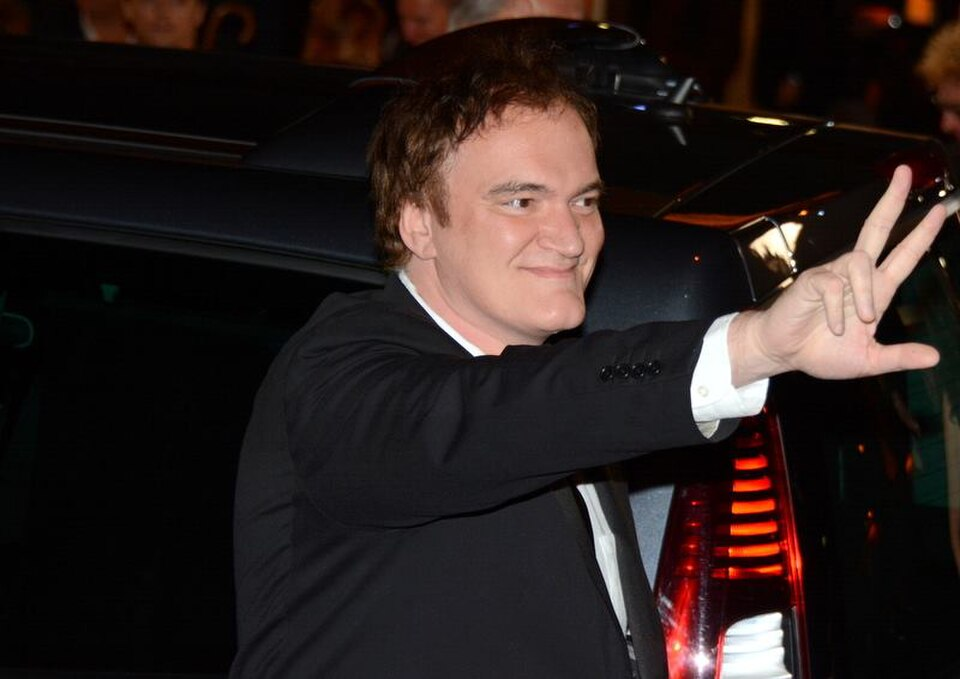
Tarantino recalled that he told his mother, “There will be no house. There will be no vacation. There will be no Elvis Cadillac for mama.” The comment stayed with him. He said he decided that if he ever became a successful writer, his mother would not receive money from his success. It was a promise made by a child, but Tarantino said he stuck to it even after his career took off. By his own account, yes, with one important exception. During the podcast, Tarantino said he had helped his mother when she ran into trouble with the US Internal Revenue Service. But he maintained that he had not bought her a house or a car. That exception is worth dwelling on, because it complicates the story considerably. A man who genuinely wanted to punish his mother would not have stepped in when the tax authorities came calling, and the fact that he did suggests the line he drew was never about withholding all help. It was about withholding the trappings of success, the visible rewards that announce to the world that a famous son has taken care of his family.
Explaining why the childhood argument still mattered to him, Tarantino said, “There are consequences for your words as you deal with your children.” He also laughed while telling the story, so the tone was not entirely serious, even though he insisted he had kept his promise. That laughter is easy to miss in retellings, and it changes the meaning of everything around it. Tarantino has always been a performer in interviews, a man who enjoys the sound of his own stories and knows how to land a punchline, and the Elvis Cadillac line is a punchline. It is also, apparently, a policy. The two things can coexist, and in Tarantino’s case they probably do, which is why the story resists the tidy readings that get attached to it. He is not a cruel son withholding support out of spite, and he is not a misunderstood artist whose mother’s doubt became the engine of his ambition. He is a person who made a decision at twelve, found it useful to keep, and has been telling the story with evident relish ever since.
There is a broader point buried in all of this about how families talk to children with unlikely ambitions. Most parents who dismiss a dream are trying to protect a kid from disappointment, and most kids who hear it forget within a week. The ones who do not forget tend to become either very driven or very bitter, and the difference between those outcomes is not always visible from the outside. Tarantino’s version of events has him becoming the first and insisting he never became the second, and the laughter suggests he has made his peace with it. Whether his mother has is a question nobody has asked her publicly, and it is the one that would actually settle the matter.
What remains unresolved is how much of this is memory and how much is narrative. Tarantino has told the story enough times that it has hardened into a set piece, and the version he tells now may owe as much to the needs of a good interview as to the events of a single argument decades ago. That does not make it false. It makes it a story about a promise, told by a man who has built a career on the proposition that words have consequences, and the fact that he applied that proposition to his own mother is either admirable consistency or an unusually long grudge, depending entirely on who is doing the judging.