Germany has strengthened Tesla’s efforts to secure approval for its driver assistance technology, with Transport Minister Steffen Bilger supporting a faster approval process after discussions with the company over technical and legal concerns. The development gives Tesla an important boost as it seeks wider acceptance for its so-called Full Self-Driving system, although questions remain over how the technology should operate within European road-safety rules.
Tesla CEO Elon Musk welcomed the German government’s position, responding to Bilger’s support on social media with the words, “Danke schoen.” The backing comes at a significant moment for Tesla, which has been working to expand the availability of its advanced driver assistance technology across Europe while facing scrutiny from regulators and road-safety experts.
Bilger said Germany would advocate for approval of the system across the European Union after holding discussions with Tesla about technical specifications and liability issues. One of the most sensitive issues has been the system’s ability to travel above posted speed limits under certain circumstances.
According to the German transport minister, Germany has reached an understanding with Tesla that the system could exceed the applicable speed limit by as much as 10 percent. German authorities intend to support a similar approach during discussions at the European level. Speed control has become one of the central issues in the debate over whether Tesla’s technology should receive broader approval.
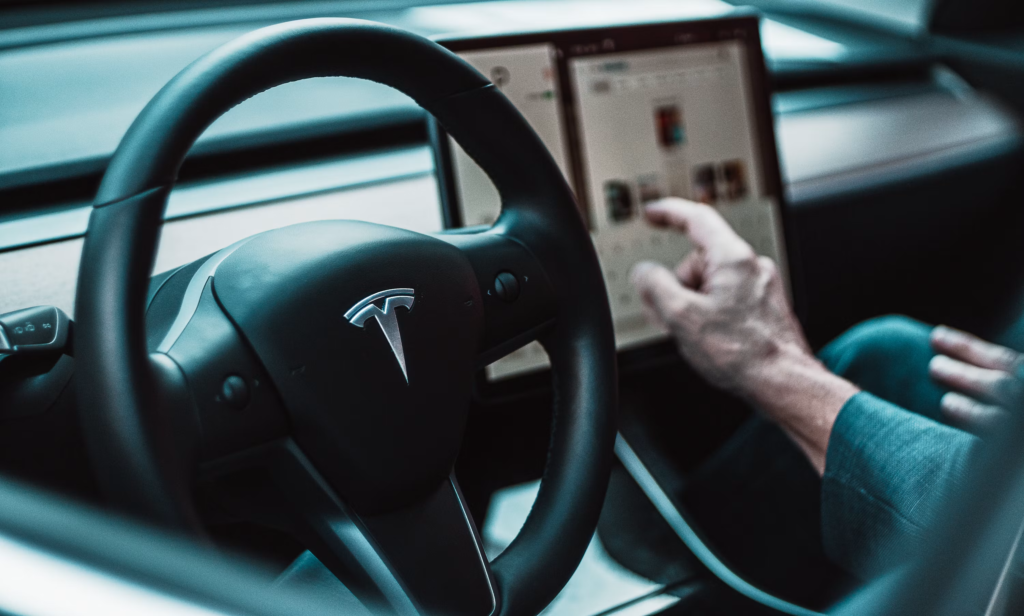
The disagreement reflects a larger question surrounding advanced driver assistance systems. Although such technology can perform tasks such as steering, acceleration and braking, drivers remain responsible for supervising the vehicle. Regulators and safety groups have therefore questioned whether allowing an automated system to exceed posted speed limits could create additional risks or encourage drivers to place too much confidence in the technology.
Tesla’s approach has attracted criticism from safety advocates and some European regulators because of its speed-offset function. Critics argue that a system designed to assist drivers should follow clearly established speed limits rather than interpret them in a way that permits additional speed. Supporters of the technology, meanwhile, have argued that flexibility can allow the system to operate more naturally in real-world traffic conditions.
Another issue discussed between Germany and Tesla concerns the name of the technology itself. Bilger said Tesla had offered to rename Full Self-Driving as “Tesla Assisted Driving.” The proposed change could help address concerns that the current name gives consumers an exaggerated impression of what the system can actually do.
Tesla’s technology is not fully autonomous. It is designed to assist the driver, who must remain responsible for monitoring the vehicle and intervening when necessary. The distinction is important because the phrase Full Self-Driving can easily be interpreted by consumers as meaning that a vehicle is capable of operating independently without human supervision.
Bilger said, “My goal is for Tesla drivers to be able to enjoy the benefits of ‘assisted driving’ throughout the EU without delay.” His comments underline Germany’s interest in allowing the technology to become available while attempting to establish conditions that address regulatory and safety concerns.
Germany’s position adds to support Tesla has received in several European markets. The Netherlands and Belgium are among the countries that have taken steps toward allowing testing or use of Tesla’s supervised driving technology. However, support across Europe remains divided, with countries including Sweden and France raising concerns about how the system handles speed limits and other aspects of automated driving.
The European approval process is consequently more complicated than obtaining permission in an individual country. An EU-wide decision requires different national authorities to agree on whether the technology meets common regulatory requirements. A vote that had been expected in October has been delayed until at least December, giving regulators additional time to conduct testing and examine unresolved issues.
Tesla has already introduced a Europe-specific version of its driver assistance system. The version approved by Dutch regulators differs from the system available in the United States, with certain features removed or restricted. Among the differences is the absence of a so-called “Mad Max” setting, which has attracted attention in the United States.
Despite those restrictions, concerns remain because the European version retains a function capable of increasing the vehicle’s maximum speed significantly above a detected speed limit in certain circumstances. Regulators therefore face the challenge of determining whether the European configuration provides an acceptable balance between automated assistance and road-safety requirements.
For Tesla, securing wider European approval has commercial importance as well as technological significance. The company has been attempting to strengthen its position in a European electric vehicle market that has become increasingly competitive. Chinese electric vehicle manufacturers have expanded their presence, while European consumers have gained access to a growing number of alternative electric models.
Tesla’s factory near Berlin also gives Germany particular significance in the company’s European operations. Greater availability of advanced driver assistance technology could help Tesla differentiate its vehicles at a time when competition is increasing. The company has presented the system as an important part of its broader strategy for improving driving safety and convenience.
Tesla has also been actively engaging with European regulators and policymakers over the technology. The company’s lobbying efforts have increased as it seeks approval across the region, with national authorities playing an important role in shaping the eventual European decision.
At the heart of the debate is Tesla’s claim that its driver assistance technology can improve road safety. The company has promoted the system as a potentially life-saving development. However, safety experts who have examined the evidence behind some of Tesla’s claims have questioned whether the available research is sufficient to support such broad conclusions.
That disagreement highlights the difficulty regulators face when evaluating emerging vehicle technology. Advanced driver assistance systems are developing rapidly, while the rules governing their use must account for technical limitations, human behaviour and legal responsibility. A feature that works effectively under one set of road conditions may behave differently when faced with unfamiliar signs, changing speed limits, construction zones or unpredictable traffic.