The New York Creative Director behind an acclaimed AI native project for Nike explains why the future of creativity belongs to people who never stopped making things by hand
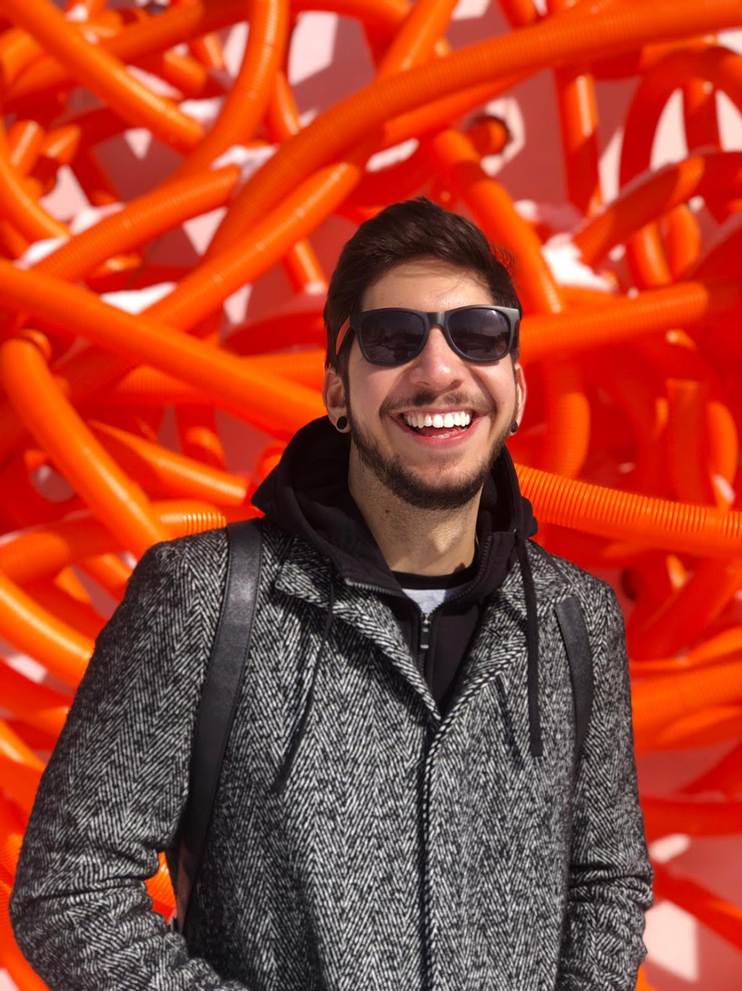
On Arthur Régis Carmo’s desk, two objects sit side by side, and together they explain his entire philosophy. One is a laptop, open to a generative AI tool that can produce a hundred visual directions before his coffee cools. The other is a worn sketchbook, its pages thick with hand lettering, pencil studies, and glue stains from paper craft experiments. Most people in the creative industry treat these two objects as enemies. He treats them as colleagues.
Arthur Régis Carmo is an internationally recognized Creative Director, Art Director, and Illustrator based in New York. Over fourteen years, he has led creative work for Google, Nike, TikTok, Twitch, Puma, Coinbase, Brita, and Afterpay. Today, he serves as Creative Director of Milk Agency, where he directs a multidisciplinary team across fashion, technology, and wellness. Notably, he has also become one of the industry’s most thoughtful pioneers of generative AI in creative production, first at dotdotdash, part of TBWA Worldwide, and now across his agency’s full output.
That combination makes him a rare voice in a loud argument. The creative world is currently split into two camps. One camp believes AI will destroy craft, taste, and creative employment. The other camp believes craft no longer matters at all, because the machines will handle it. Carmo rejects both positions with equal conviction. Instead, he offers a third way, built on a simple distinction. “A shortcut replaces thinking,” he says. “A collaborator provokes it. Everything depends on which one you invite into the room.”
The stakes of that distinction could hardly be higher. Studios everywhere are rewriting their workflows, clients are asking pointed questions about authenticity, and young designers wonder whether their training still matters. Against that backdrop, the career of Arthur Régis Carmo reads like a field guide. He has tested his answers on real projects, for real global brands, under real scrutiny. So we spent an afternoon in his New York studio, between the laptop and the sketchbook, mapping how a craftsman actually works with an algorithm.
The Hands Came First
To understand why Arthur Régis Carmo can use these tools without being used by them, you have to start with his hands. Long before any algorithm entered his workflow, he built his career on physical, patient, analog craft. That order matters enormously, and he insists on it.
His training began in Goiânia, Brazil, with a Bachelor of Arts in Graphic Design from Universidade Federal de Goiás. At the studio Nitrocorpz, he spent two years drawing illustrations, designing CD covers, and building posters. Later, at Pratt Institute in New York, he earned a Master of Fine Arts in Communications Design, sharpening both his concepts and his craft. Throughout it all, he lettered by hand, animated frame by frame, and made things he could physically touch.
The proof sits in print. Capsule Books featured his lettering in Ascenders Vol. 1: Leaders in Contemporary Lettering, a curated hardcover directory of the world’s leading typographers and lettering artists. Meanwhile, the design publication Abduzeedo profiled his artwork Cali Lifestyle, a 33 by 21 inch piece built entirely from colored paper, foam paper, and glue. The publication praised the depth of its layered construction. No algorithm touched it. Only patience did.
“Paper resists you,” he says, smiling. “Glue dries when it wants, not when you want. Working with physical materials teaches you negotiation, humility, and care. Then, when you sit down with an AI tool, you bring all of that with you. The tool meets a craftsman, not a passenger.”
This sequence explains something important about the current debate. Many of the loudest AI enthusiasts never developed craft, so the tools became their entire identity. Meanwhile, many of the fiercest critics never seriously tried the tools, so fear filled the gap where experience should sit. Arthur Régis Carmo stands in neither group, and that is exactly why his perspective travels so well. He earned his taste the slow way first. Afterward, he learned the machines. The order gave him leverage over both.
A Defining Experiment with Nike
His philosophy faced its greatest test on the biggest possible stage. During his years at dotdotdash, Carmo helped conceive and produce a creative project for Nike that was native to generative AI from the start. The technology did not decorate the idea. Rather, it lived at the center of the idea, shaping what the project could be and how far it could reach.
The results exceeded every expectation. The project became part of Nike’s global culture, and it connected with a vast community of fans worldwide. For Carmo, however, the deeper victory was philosophical. The project proved that generative tools could serve a brand built on human excellence without diluting it. “We used the tools with the same rigor we apply to any craft,” he explains. “We pushed them, questioned them, and rejected most of what they offered. That is exactly how you treat a human collaborator, too.”
He describes the working process as a conversation rather than a command. The team would always set a clear creative intent first. Then the tools would respond, and the humans would judge. Some outputs opened doors nobody had imagined, so the team walked through them. Most outputs went straight into the trash, and that was fine. Because the intent stayed human, the work stayed honest.
“For a kid from Goiânia, seeing that work travel across Nike’s world still feels surreal,” he admits. “But the lesson matters more than the reach. New technology can honor craft rather than replace it. However, that only happens when creative intent leads the process from the first minute to the last.”
The Rules of the Room at Milk Agency
Since December 2024, Arthur Régis Carmo has carried that philosophy into agency leadership. As Creative Director of Milk Agency, he oversees the full creative output for clients across fashion, technology, and wellness. There, he has pioneered integrating generative AI into the agency’s daily workflow. The results speak plainly. Creative speed has increased, and new conceptual and visual possibilities have opened for clients.
Yet speed was never the point, and he repeats this constantly. The point is expansion. AI lets his team explore fifty directions in the time that once allowed five. As a result, surviving ideas face far more competition before they reach a client. The bar rises, not falls. “People assume AI lowers standards,” he says. “Used properly, it does the opposite. Weak ideas used to survive because nobody had time to beat them. Now they get beaten by breakfast.”
Inside the agency, he enforces three rules, and everyone knows them. First, human intent starts every project. A brief, a strategy, and a point of view must exist before anyone opens a tool. Second, human judgment ends every project. Nothing reaches a client without passing through trained eyes and deliberate taste. Third, the machine sits in the middle of the process, never at the head of the table.
Those rules protect something he considers sacred: the client’s trust. Brands come to Milk Agency for a distinctive point of view, not for statistically probable images. Therefore, every AI-assisted exploration gets filtered through the agency’s strategy and the client’s truth. The tools widen the search, while the humans choose the destination.
What a Session Actually Looks Like
Abstract philosophy is easy, so we asked Arthur Régis Carmo to describe a real working session. His answer reveals how deliberately structured his process actually is. It begins nowhere near a screen. First, he reads the brief slowly, sometimes twice, and then he puts it away. Next comes a walk, a sketchbook, or simply silence. During that stage, he hunts for the project’s intent, the single truth the work must express. Nothing else happens until he finds it.
Only then does the generative phase open, and it opens wide. He and his team feed the tools intent, references, and constraints, then push for volume. Fifty directions, eighty, sometimes more. Importantly, they prompt from craft knowledge, not from vague wishes. Because he understands composition, typography, and color at a physical level, his instructions carry precision that generic prompting never achieves. The machine responds to expertise with better raw material.
After that comes the stage he considers the real work: the edit. The team spreads everything out and judges without mercy. Most directions die within minutes. A few survive, and those few get rebuilt by human hands. Designers redraw, letterers refine, and animators reconstruct, until the surviving idea carries deliberate human fingerprints in every detail. “The tool starts sentences,” he explains. “We finish them. A first draft is not a voice.”
Finally, he applies the last filter himself, as the agency’s final creative authority. He asks whether the work honors the client’s truth, respects the audience, and says something only this brand could say. If any answer is no, the process loops back. As a result, what leaves the studio never feels generated. Instead, it feels decided, which is a completely different thing.
Taste Is the Differentiator
Ask Carmo what separates creatives who thrive with AI from those who drown in it, and his answer arrives instantly. Taste. Not access, not prompts, and not technical skill. Taste. “The tools can generate a thousand options,” he says. “But only a trained eye knows which one sings. That eye is the whole job now.”
This is where his years of analog craft pay their deepest dividends. Because he spent over a decade lettering, illustrating, animating, and building things by hand, he developed an internal compass that no tool can fake. He can feel when a curve is lazy, when a color relationship lies, and when a composition merely imitates confidence. Accordingly, he can push generative tools past their comfortable defaults, toward territory that actually surprises.
He also relies on a quieter skill, one that predates every technology. Listening. His personal credo holds that every project already knows what it wants to become, and his role is translation, not imposition. So before any tool enters the process, he sits with the brief in silence. He asks what the work is trying to say. Only then does the machine join the conversation, and by that point, it serves a vision instead of generating one.
“The louder the tools get, the more valuable your silence becomes,” he says. “AI raises the volume of options to infinity. Meanwhile, the ability to hear what actually matters becomes the rarest skill in the industry. Ironically, the algorithm made the quiet craftsman more valuable, not less.”
Answering the Fear
Carmo refuses to dismiss the anxiety in his industry, because he considers it legitimate. Careless AI use really does produce generic work, and generic work really does erode client trust and creative jobs. He has seen portfolios flooded with statistically average images, and he finds them as depressing as anyone does. However, he locates the danger in the user, not the tool.
“A camera did not end painting,” he points out. “Instead, it freed painting to become something photography could not be. The same negotiation is happening right now. The tasks that were always mechanical will go to the machines. Then the human work will concentrate where it always belonged, in intent, meaning, and taste.”
He backs the argument with what he sees inside his own team. Nobody at Milk Agency lost work to the tools. Instead, roles evolved upward. Designers spend less time on mechanical production and more time on concept, story, and refinement. Animators explore bolder directions, because failed experiments now cost hours instead of weeks. Even junior creatives benefit, since they can visualize their ideas quickly and defend them in the room. “The tools flattened the distance between imagining and showing,” he says. “For young talent with a real point of view, that is a gift, not a threat.”
For working creatives, his prescription is concrete. Keep making things by hand, because physical craft trains the judgment that AI work demands. Learn the tools deeply, because refusing them surrenders the conversation to people with worse taste than yours. Develop a point of view, because a point of view is the one thing no model can generate for you. Finally, protect your curiosity, since the tools will change every six months, while curiosity compounds forever.
He offers the same message to clients who worry about authenticity. He argues the question is never whether an agency uses AI. Rather, the question is whether human intent leads the work. At Milk Agency, he serves as the final creative authority on every deliverable, and that authority is precisely the guarantee. A person, not a process, signs the work.
The Road Ahead
Where does this all lead? Carmo predicts a creative industry divided not by tools but by temperament. On one side will stand generators, people who produce endless competent output and compete on volume. On the other side will stand editors and translators, people who know why one option matters and ten thousand do not. The second group, he believes, will define the culture. Naturally, he is building Milk Agency to live there.
He also sees a renaissance coming for the very skills the panic declared obsolete. Hand lettering, illustration, paper craft, and physical making will grow more precious as synthetic imagery floods every feed. Audiences already crave the evidence of human touch, and brands will follow that craving. In other words, the sketchbook on his desk is not nostalgia. Strategically, it is the future sitting in plain sight.
For creative education, he sees a similar correction ahead. Schools that abandoned foundational craft for tool training will regret it, he predicts, because tools expire while foundations compound. When he speaks with students at Pratt, where the Communications Design department still features him as an alumni voice, he tells them to draw, letter, and build before they prompt. “Learn to see first,” he tells them. “The machines will always be there next semester. However, an eye takes years, and nobody can download one for you.”
His own next chapter continues on both fronts at once. At Milk Agency, he keeps refining how a modern creative team collaborates with machines, and he shapes new business, resourcing, and team structure around that vision. Meanwhile, his hands stay busy with lettering and personal craft, feeding the compass that guides everything else.
The two objects on his desk, then, are not a contradiction. Together, they form a complete argument about the future of creativity. The algorithm expands what a craftsman can explore. The craftsman decides what deserves to exist. Arthur Régis Carmo simply refuses to choose between them, and his career suggests that refusal is the wisest position in the industry. Explore his work at arthurregis.com, follow him on Instagram, and connect on LinkedIn.
Arthur Régis Carmo is an internationally recognized Creative Director, Art Director, and Illustrator based in New York. Over fourteen years, he has shaped brand identities, campaigns, and digital experiences for global clients including Google, Nike, TikTok, Twitch, Puma, Coinbase, Brita, and Afterpay.
Born in Goiânia, Brazil, he holds a Master of Fine Arts in Communications Design from Pratt Institute and a specialization in Strategic Design and Management from the New School. His career took him through Social Chain US and dotdotdash, part of TBWA Worldwide, before he became Creative Director of Milk Agency, where he leads a multidisciplinary team across fashion, technology, and wellness.
His defining projects include an AI native creative collaboration with Nike, brand experience work for Google, and a symbol for Salford City Football Club, developed alongside an ownership group led by Sir David Beckham. A pioneer of generative AI in creative workflows, he treats new technology as a collaborator rather than a shortcut.
His lettering appears in Ascenders Vol. 1 from Capsule Books, and Abduzeedo has featured his paper craft work. Known for a playful, colorful sensibility rooted in his Brazilian heritage, he believes good design is uncovered, not imposed.