When the United States government recently issued an export control directive aimed at restricting access to certain advanced AI models developed by Anthropic, the decision sent immediate ripples far beyond American borders. Within hours, Anthropic announced it would abruptly disable its most sophisticated artificial intelligence systems for all users, citing the U.S. order that specifically suspended access for foreign nationals over national security concerns. For European companies, researchers, and developers who had been relying on those tools, the shift was sudden and unsettling. It is precisely this kind of real-world disruption that the European Commission now finds itself trying to navigate.
On Sunday, a spokesperson for the Commission confirmed that the executive body is actively looking into the practical consequences of the U.S. decision on European users. Thomas Regnier, the Commission’s spokesperson, explained that while the new generation of highly capable AI models brings substantial benefits—particularly in areas like cyber-defence—they also raise serious cybersecurity concerns that require careful handling. His statement struck a careful balance: acknowledging the legitimacy of security worries while pushing back against any measures that might unfairly single out international partners.
“We are seeing a new generation of highly capable AI models reach the market. These models offer significant benefits, including for cyber-defence, but they also raise serious cybersecurity concerns that need to be addressed,” Regnier said. “We believe that contingency measures taken in this light should not be discriminatory against partners.”
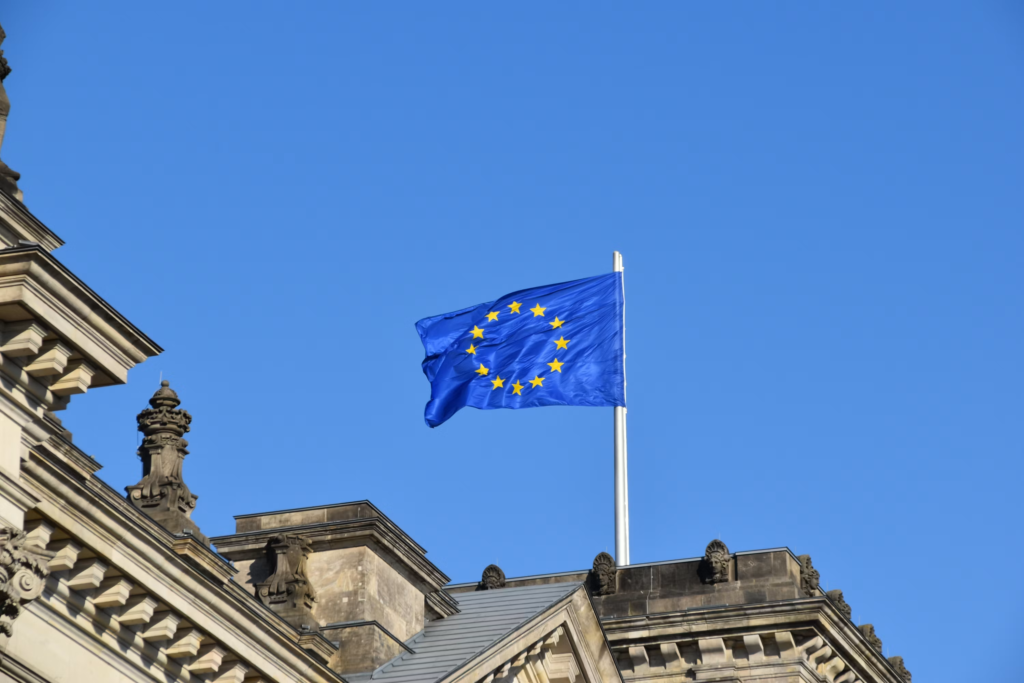
That last line matters more than it might seem at first glance. For months, European policymakers have watched the rapid evolution of frontier AI models with a mixture of admiration and anxiety. On one hand, these systems promise breakthroughs in everything from medical research to logistics. On the other, they concentrate enormous technological power in the hands of a few private companies headquartered outside the EU. When a foreign government can, with a single directive, switch off access for an entire continent’s worth of users, the vulnerability becomes painfully concrete.
The Anthropic case is a vivid illustration of that vulnerability. Anthropic, known for its focus on AI safety and its “Constitutional AI” approach, had been providing access to its most advanced models to users around the world, including many in Europe. The abrupt suspension, triggered by a U.S. national security order, left academic labs, startups, and even some public sector institutions scrambling to understand what had changed and whether they could continue their work. Some had integrated Anthropic’s models into production systems. Others were midway through critical research projects. The disruption was not theoretical; it was immediate and operational.
Regnier did not mince words about the broader lesson. “This development is a further illustration of why Europe needs to strengthen its technological sovereignty,” he said. That phrase—“technological sovereignty”—has become something of a rallying cry within EU policy circles over the last several years. It reflects a growing recognition that dependence on non-European digital infrastructure, cloud platforms, and now advanced AI models carries strategic risks. The Commission has already pushed forward with initiatives like the EU Chips Act, the Gaia-X cloud project, and various open-source AI efforts. But the Anthropic decision adds fresh urgency to those conversations.
What does the Commission actually do now? According to Regnier, the initial step is a close, practical assessment. “We are looking closely at the practical consequences of this for European users of these services,” he said. That means mapping exactly which European organizations were affected, what alternatives they have, and whether there are legal or policy tools that could mitigate similar disruptions in the future. It is not about immediately retaliating or imposing mirror controls. Rather, it is about understanding the real-world fallout and then asking what Europe can do to insulate itself from unilateral decisions made elsewhere.
For European businesses and researchers, the situation presents a difficult balance. On one side, there is the undeniable utility of cutting-edge American AI models. On the other, there is the risk of being cut off without warning. Some will argue that the EU should accelerate its own investment in homegrown foundation models, perhaps through public-private partnerships or by relaxing certain regulatory constraints to foster innovation. Others will point out that building truly competitive alternatives will take years and billions of euros, and that in the meantime, pragmatic cooperation with U.S. providers remains essential.