Anne Hathaway has once again captured the attention of fans worldwide with her recent announcement about expecting her third child, a revelation that has sparked conversations not just about her growing family but also about the broader narrative of motherhood and body acceptance that she has championed throughout her journey as a parent. The Oscar-winning actress, already a devoted mother to two sons with her husband Adam Shulman, has consistently used her platform to discuss the realities of pregnancy, childbirth, and the often complicated relationship women have with their changing bodies. What sets Hathaway apart from many celebrities who shy away from discussing the less glamorous aspects of motherhood is her unwavering commitment to honesty and vulnerability, qualities that have endeared her to millions of followers who see their own experiences reflected in her words.
In a particularly memorable Instagram post from several years ago, shared just months after the birth of her first son Jonathan Rosebanks, Hathaway delivered what many considered a masterclass in maternal self-compassion. The photograph accompanying her message showed her in denim overalls, and her caption resonated with women everywhere who had struggled with the pressure to immediately snap back to their pre-pregnancy bodies. She wrote with remarkable candor, “There is no shame in gaining weight during pregnancy or ever. There is no shame if it takes longer than you think it will to lose the weight if you want to lose it at all.” These words struck a chord precisely because they acknowledged what so many new mothers experience but rarely voice aloud, the silent pressure to conform to unrealistic expectations about postpartum recovery.
Hathaway continued her empowering message by addressing the very natural phenomenon of bodily change, writing, “There is no shame in finally breaking down and making your own jean shorts because last summer’s are just too dang short for this summer’s thighs. Bodies change. Bodies grow. Bodies shrink. It’s all love don’t let anyone tell you otherwise.” This particular sentiment captured something profoundly universal about the female experience, the way women often feel compelled to apologize for taking up space, for their bodies evolving through different life stages, and for not fitting into the same clothing sizes they wore before pregnancy. By reframing these changes as natural and worthy of love rather than shame, Hathaway offered a powerful counterpoint to the toxic narratives that dominate discussions about postpartum bodies.
Her appearance on The Ellen DeGeneres Show around the same period further illustrated her evolving relationship with her post-birth body and her newfound confidence. During the interview, Hathaway recounted an encounter that many women will find painfully familiar. She described being told, “If somebody says, ‘I had a baby 13 years ago,’ you say, ‘You look great.’ That’s what you do. That is the etiquette.” The actress then shared how she responded when someone asked her about losing the baby weight just seven weeks after giving birth, a moment that highlighted the casual cruelty of such questions and the way society imposes impossible timelines on new mothers. Her anecdote revealed how these seemingly innocuous comments carry significant weight, particularly for women navigating the already challenging postpartum period.
What made Hathaway’s revelations particularly impactful was her honesty about her own initial discomfort when she began returning to exercise. She admitted, “I walk in, I’m like, ‘Yeah, I work out with 5 lb. weights, but I pushed a baby out of my body, I feel good right now.'” This moment of raw honesty captured something essential about the journey toward self-acceptance. It acknowledged that even someone as accomplished and seemingly confident as Hathaway had moments of awkwardness and uncertainty, but also demonstrated her determination to reframe her perspective and celebrate what her body had accomplished rather than focusing solely on what it might look like.
The actress’s recent pregnancy announcement has naturally brought these older reflections back into public discourse, and they feel more relevant now than ever before. In a culture that continues to bombard women with conflicting messages about their bodies, Hathaway’s consistent message about embracing change and rejecting shame offers a refreshing alternative. Her willingness to speak openly about the challenges of motherhood, from physical changes to emotional adjustments, has positioned her as an authentic voice in conversations that often feel dominated by carefully curated perfection.
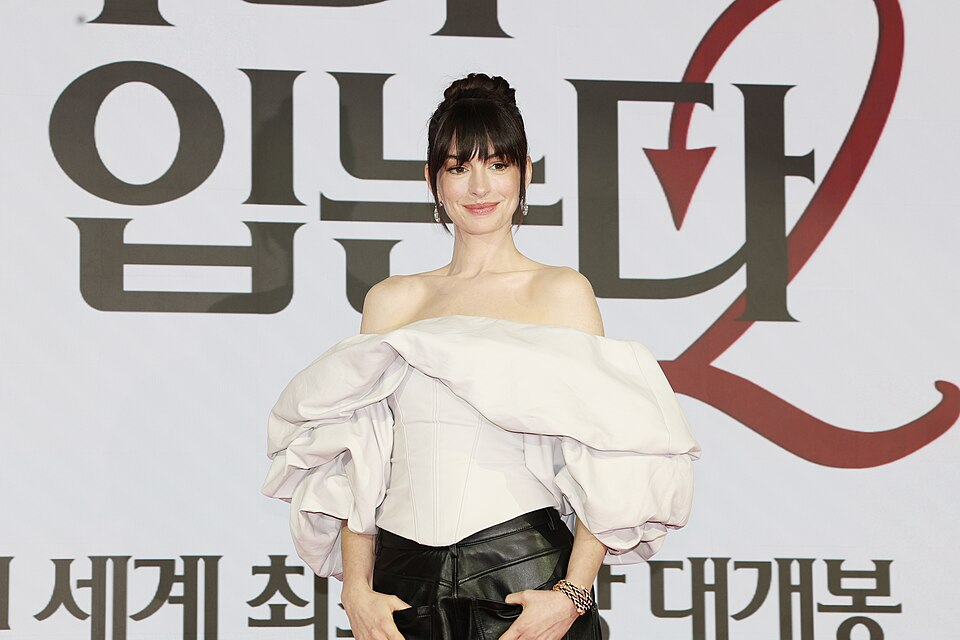
Beyond her personal reflections, Hathaway’s professional trajectory has continued to flourish alongside her family life. Her recent work includes The Devil Wears Prada 2, a project that reunited her with some of her most beloved characters, as well as the thriller Mother Mary, which was released through online streaming platforms. Her upcoming film, The End of Oak Street, represents an interesting departure into science fiction territory, with the premise involving a neighborhood transported back in time to encounter dinosaurs. This diversity in her choice of projects demonstrates her ongoing commitment to challenging herself artistically while balancing the demands of motherhood.
Perhaps what makes Hathaway’s perspective on postpartum bodies so compelling is the way she connects her personal experience to broader social expectations. She challenges not just individual attitudes but systemic pressures that make women feel inadequate if their bodies don’t conform to narrowly defined standards. Her message encourages women to focus on their health and well-being rather than arbitrary aesthetic goals, and to recognize that the changes their bodies undergo through pregnancy and motherhood are not flaws to be corrected but evidence of their strength and resilience.