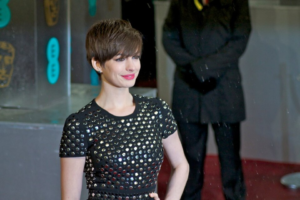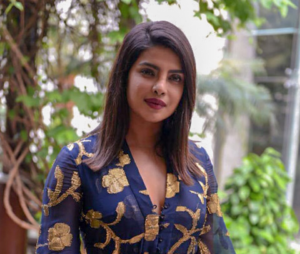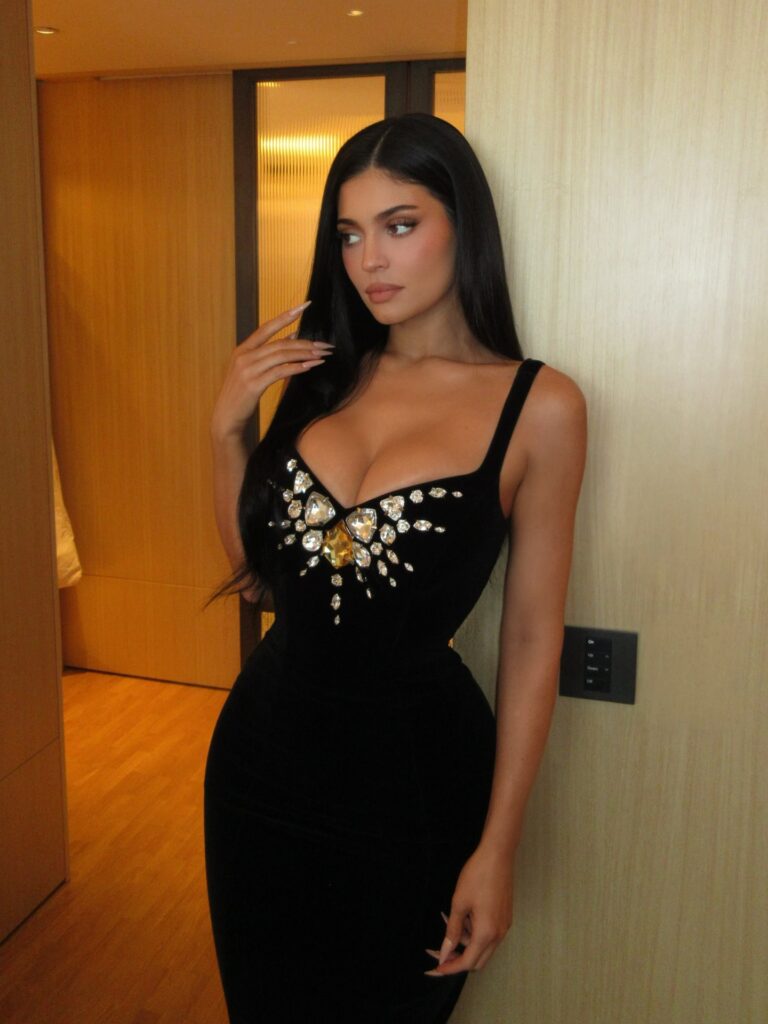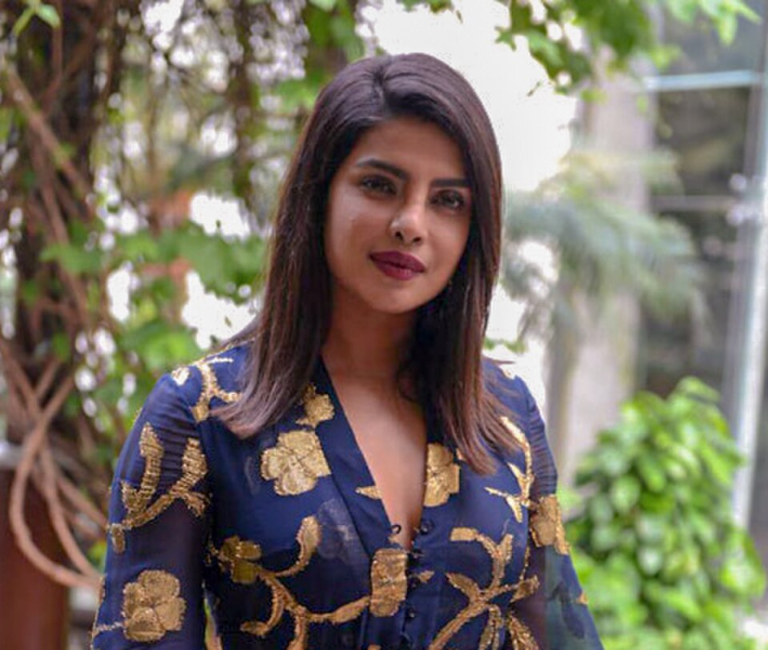
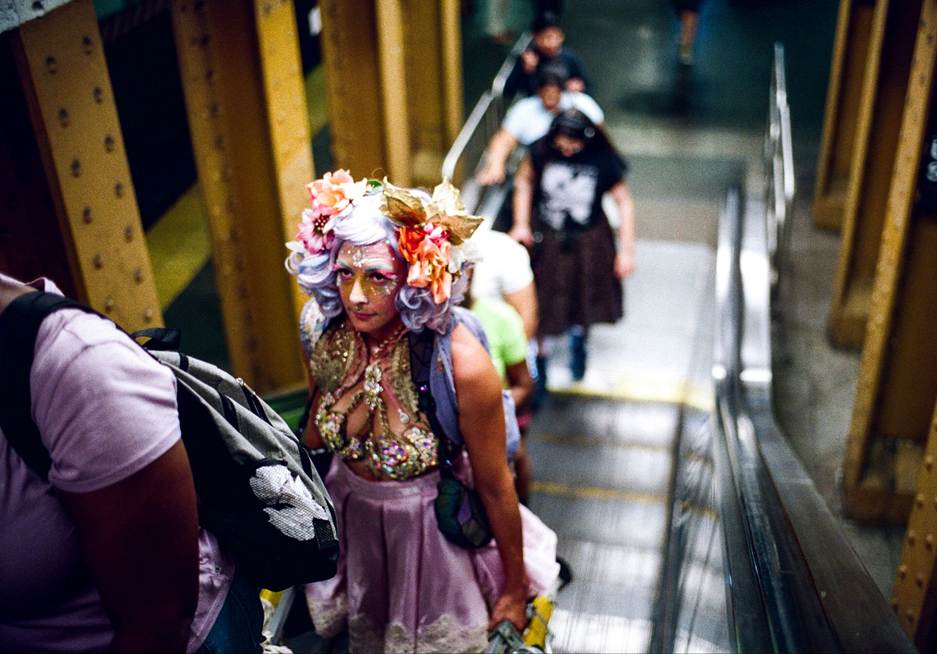
Tania Franco Klein, Valeria Navarrete Ferrari, Sandra Blow, Lila Avilés, and Sofía Ayerdi are turning the camera on girlhood, gender, queer nightlife, and grief, and changing who gets to picture Mexico and its diaspora.
There is a particular charge running through a generation of young artists working between Mexico and the United States right now, a sense that the camera, whether it shoots a single staged frame or twenty minutes of unscripted documentary, can be turned back on the things that shaped them. Girlhood and machismo. Catholicism and queer nightlife. Femicide and grief and the ordinary tenderness of a family kitchen. These are not new subjects, but the artists gathered here approach them without the distance of the outsider. They photograph and film their own communities, their own mothers and chosen families, their own bodies, and in doing so, they are quietly rewriting who gets to make the picture of Mexico and the Mexican diaspora, and what that picture is allowed to contain.
For most of the twentieth century, the dominant images of Mexico that traveled abroad were made by a relatively narrow set of hands, and the country’s women tended to appear in front of the lens far more often than behind it. That arrangement is coming undone. The artists below, all women, most born around or after 1990, have grown up with cameras of their own and with the conviction that the intimate, the domestic, the marginal, and the queer are not minor subjects but central ones. They are as comfortable citing Agnès Varda and Lucrecia Martel as they are working in a darkroom or editing a thesis film alone at a laptop. And they are increasingly being noticed: by MoMA, by the Academy of Motion Picture Arts and Sciences, by the festival circuit that runs from Berlin to Tribeca to Morelia.
Five of them, ranging from internationally collected names to a thesis-stage filmmaker just stepping into the field, suggest where this work is heading. Tania Franco Klein, the most internationally visible young Mexican photographer at work today, builds saturated, cinematic tableaux that blur the line between reality and fiction, and was selected this year for MoMA’s New Photography 2025: Lines of Belonging. Valeria Navarrete Ferrari, a trilingual artist and documentary filmmaker based in Brooklyn, moves between an intimate documentary practice rooted in Mexican girlhood and gender and an ongoing street-photography series shot on film throughout New York. Sandra Blow, who shared that same MoMA wall with Franco Klein, has spent fifteen years photographing Mexico City’s queer nightlife from inside it, making tender portraits of the chosen family she found there. Lila Avilés, the most established of the group, has twice carried Mexico into the Oscar race with her features The Chambermaid and Tótem, building openly on a lineage of women filmmakers. And Sofía Ayerdi, a writer-director from Guerrero selected for the Academy’s Gold Rising program, makes work steeped in magical realism as she moves toward her first feature. Two of them met this past year on the same museum wall; one has twice represented her country at the Oscars; one is finishing her debut documentary. All of them, in different registers, are concerned with belonging.
Tania Franco Klein
Tania Franco Klein is probably the most internationally visible young Mexican photographer working today, and her path into the medium was a sideways one. Born in Mexico City in 1990, she studied architecture at Centro de Diseño, Cine y Televisión before earning a master’s in photography from the University of the Arts London. That architectural training never quite left her: she builds her images the way someone designs a room, controlling every plane, every fall of light, every angle of the body inside the frame.
The result is a body of work that looks less like a documentary and more like film stills from a movie that doesn’t exist. Saturated in sickly motel yellows and dusk pinks, her photographs stage solitary figures, very often the artist herself, in diners, cars, bathrooms, and the liminal non-places of the American road. Critics have described these environments as charged with cinematic dread, the lone female figure becoming a vessel for a very contemporary anxiety. Across series such as Positive Disintegration, Proceed To The Route, and Break In Case Of Emergency, she circles loneliness, media overstimulation, performance, and the myth of the American Dream. She has spoken about how we construct flattering identities on social media as if there were shame in the rest of ourselves.
Her standing was confirmed in 2025, when she was selected for New Photography 2025: Lines of Belonging, the 40th-anniversary edition of MoMA’s celebrated series. The work she showed there, Subject Studies: Chapter 1, marked a conceptual leap: she built four scenes, a bathroom, a diner table, a car’s back seat, a view through office blinds, and photographed more than a hundred different people holding essentially the same pose in each. The effect is disorienting and pointed. As identifiers like age, race, and gender multiply across otherwise identical setups, the series turns the viewer’s own assumptions into its real subject, an anthropological study of bias and projection. Her photographs are now held in major public collections, including MoMA and the J. Paul Getty Museum, and she describes her method simply as creating tableaux, small, staged worlds where reality and fiction refuse to separate.
Valeria Navarrete Ferrari
If Franco Klein represents the established edge of this generation, Valeria Navarrete Ferrari represents its emerging one, and a useful reminder that the most interesting young artists often arrive having already lived inside the art world they’re entering. A trilingual Mexican visual artist, photographer, and documentary filmmaker based in Brooklyn, Navarrete Ferrari holds a BFA in Photography from Parsons School of Design, with a minor in Film and Production. Her practice moves deliberately in two directions at once: a documentary and portrait practice rooted in identity, Mexico, girlhood, gender, and Catholicism, shot on digital; and an ongoing street photography series shot on film across New York City.
Her central work to date is Las Niñas de Alfredo de Musset, a roughly nineteen-minute documentary she directed, shot, produced, and edited single-handedly. It is an intimate film about Mexican girlhood, femicide, and gender-based violence, tracing the lives of the women who raised her across Mexico City and Ixtapa Zihuatanejo, moving from unscripted family interviews to the streets of the 8M feminist march, and dedicated to the memory of Janet Córdova. The film premiered at the Parsons BFA Thesis Exhibition in New York in May 2025 as a video installation with a headphone viewing station and is now in post-production ahead of festival submissions, including Morelia, Ambulante, Tribeca, IDFA, and DOC NYC.
Alongside the documentary work sits Juan Pablo, an ongoing staged fine-art portrait series shot in a soft, painterly register that examines internalized machismo and Mexican masculine identity through a single subject who stands in for an entire generation of men raised inside inherited gender roles. That she pairs this with years of film street photography, begun, as she tells it, during a teenage summer program in New York and sustained across four years of living in the city, speaks to a sensibility that is comfortable on both sides of the documentary/fiction line that artists like Franco Klein push against. Her résumé reads like a tour of the institutions shaping this moment: production roles at Kurimanzutto, Allouche Gallery, and Georgina Pounds Gallery, plus production coordination at Atlantic Pictures. She is, in other words, an artist who has watched the machinery of the contemporary art and film worlds up close, and is now turning that vantage toward her own subjects.
Sandra Blow
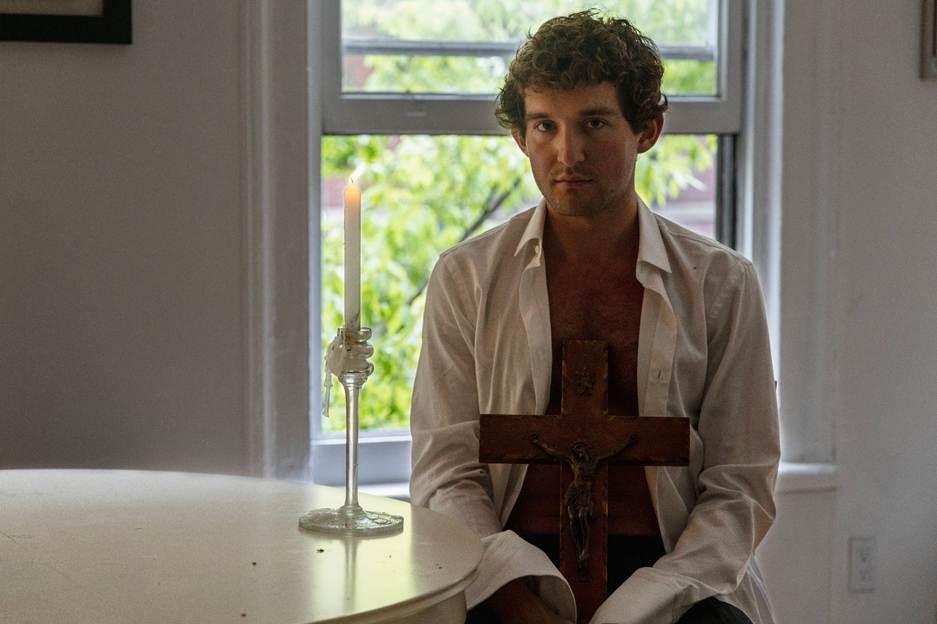
Sandra Blow makes the perfect counterpoint to Franco Klein’s controlled, staged universe, and, in a neat coincidence, the two shared a wall this year. Also born in 1990 and based in Mexico City, Blow appeared in the same MoMA Lines of Belonging exhibition, but her work could hardly come from a more different impulse. Where Franco Klein constructs, Blow belongs. A self-described “glitter documentarian” who grew up in conservative Atizapán de Zaragoza, she found her chosen family in Mexico City’s queer nightlife, and for fifteen years she has photographed that world from inside it, not as an observer but as a participant, a supporter, a friend.
Her portraits of friends, drag performers, and glamorous strangers emerging from the shadows of the dance floor are defined by what reads as unmistakable love. She came to the camera through advertising studies, and that editorial polish survives in her attention to jewelry, fashion, and the way bodies meet the light. But she trains those magazine instincts on the racialized, queer, and marginalized individuals long excluded from mainstream Mexican beauty narratives, reclaiming the aesthetics of glamour for people the industry never wanted in front of its lens. Her MoMA selection, nineteen photographs in all, placed her work on community and visibility within a show explicitly concerned with reimagining the archive and imagining future communities.
There is also melancholy braided through the glitter. One of her best-known images, a luminous 2017 portrait of her late friend Alan Balthazar, an iconic figure of Mexico City’s emerging queer nightlife, now hangs in the museum as both celebration and memorial; at the exhibition’s opening, she thanked Alan for being present in spirit. Blow has been candid, too, about the precarity of an artist’s life, noting that fifteen years of work and international recognition have not insulated her from financial hardship. That tension, between the dream realized on a museum wall and the difficulty of sustaining a creative life, gives her work its grit. Where this generation so often turns the lens on itself, Blow turns it outward, toward the people she loves, and insists they be seen exactly as they wish to be.
Lila Avilés
Slightly more established but still very much part of this wave, Lila Avilés has become one of the most quietly exciting directors in Mexican cinema. Born in Mexico City in 1982, she came to film the long way around, through theater, opera, and dance, and through stints as an assistant director, makeup artist, costume designer, and actress. She did not attend film school; she learned, as she puts it, on the go, all the while dreaming of becoming a filmmaker. She founded her production company, Limerencia Films, in 2018, the same year she broke out with her debut feature, The Chambermaid (La Camarista).
That first film, a spare, hypnotic portrait of a young housekeeper navigating the invisible labor of an upscale Mexico City hotel, premiered at Toronto in 2018, traveled to more than sixty festivals, won the Ariel for Best Debut Work, and was selected to represent Mexico in the international feature Oscar race. Her 2023 follow-up, Tótem, confirmed that the debut was no fluke. Told largely through the eyes of seven-year-old Sol as her family prepares a birthday party for her terminally ill father, the film is a luminous, autobiographical reflection on life, death, and family. It competed at the Berlinale, where it won the Ecumenical Jury Award, earned Avilés the Best Director prize at the Jerusalem Film Festival, and once again carried Mexico’s banner into the Oscar conversation.
What makes Avilés a fitting elder sister to the photographers here is how openly she builds on a lineage of women. She names Agnès Varda as a guiding figure and counts Lucrecia Martel among her touchstones, a connection made literal through her collaboration with Guido Berenblum, Martel’s longtime sound designer, with whom she constructs dense sonic architectures meant to be felt rather than heard. Her intimate, observational style threads genuine emotion through the quotidian without tipping into sentimentality. And she is forthright about the stakes of being part of a new generation of women directors across Mexico, Spain, Argentina, and Colombia, framing her own arrival in cinema as finally reaching the place where she belongs.
Sofía Ayerdi
If Avilés shows where this path can lead, Sofía Ayerdi shows where it begins. A writer-director from Guerrero, on Mexico’s Pacific coast, Ayerdi makes work that explores femininity and the search for identity through the lens of magical realism, drawing on her family’s history and the small-town world she comes from. She founded her production company, Zanate Films, with the explicit purpose of promoting filmmaking in Tecpan de Galeana, the town where she grew up , a gesture that says a great deal about how this generation thinks about where art is allowed to come from.
Her trajectory has been steep. She was selected for the Academy of Motion Picture Arts and Sciences’ Gold Rising program, a global talent and inclusion initiative run by the organization behind the Oscars, and in 2022 she was chosen as a trophy presenter at the Academy Awards themselves. She has since cycled through a remarkable run of emerging-artist programs: a fellowship with Blackmagic Collective, the First Frame Initiative, a Netflix-sponsored LALIFF Inclusion Fellowship through which she directed Na Savi, and the mitú x Walmart Filmmaker Mentorship Program, where she made the short Aguamadre. That film, about a sixty-five-year-old woman who rediscovers herself through swimming, distills Ayerdi’s central preoccupation into a single image: it is never too late, she insists, to rediscover yourself.
Her shorts, among them Taliban Flower, El Sueño, and Bonsai, range widely in subject but circle back to vulnerability, identity, and the inner lives of people the camera usually overlooks. Acutely aware that a tiny fraction of working directors are Latino, she describes that statistic less as discouragement than as fuel. She has not yet made her first feature, which is precisely why she belongs on this list; she is the watch-this-space artist, the one whose early work suggests a major voice still gathering itself.
A generation, not a movement
It would be a mistake to flatten these five into a single school. Franco Klein stages; Blow documents; Valeria Navarrete Ferrari does both; Avilés works on patient features while Ayerdi sketches in shorts. What binds them is less a style than a stance. Each insists on proximity to her subject, the chosen family, the mother who raised her, the town she comes from, her own reflection, and each treats identity, gender, and belonging not as themes to illustrate but as the very material of the work. Two of them met this year on the same MoMA wall; one has twice carried Mexico to the Oscars; one is finishing her first documentary; one is about to make her first feature. Taken together, they make a strong argument that the most compelling images coming out of Mexico and its diaspora are increasingly being made by young women turning the camera toward the lives they know best and asking the rest of us to look.
Website Valeria Navarrete Ferrari