The burgeoning partnership between SpaceX and the U.S. military is again being called into question following internal issues surrounding Starlink apparently disrupting critical Navy drone trials. Although Starlink has emerged as one of the most significant communication networks in both civilian and military operations, the recent failures have led to the questioning of whether the dependency on such a company to the extent of being the main contributor to the communication system may pose severe threats in case of a future conflict.
In August of last year, U.S. Navy officials were conducting tests on the unmanned surface vessels off the coast of California when one of the Starlink massive outages abruptly halted the operations. The interference was said to have impacted millions of Starlink subscribers worldwide and disrupted the communications of almost twenty-dozen autonomous ships that were part of the military exercise. The boats had been idle in the water nearly an hour before operators could no longer keep a steady contact with them.
The incident revealed what is commonly referred to by military officials as a single point of failure, i.e., when one system fails, a far bigger operation can easily collapse. Here, the Navy drone program relied on Starlink to the extent that even a momentary failure would stop the whole test.
This was not the first time according to internal Navy documents reviewed by Reuters. It was also reported that in some cases, the communication between the Navy and autonomous vessels was disrupted by Starlink-related issues. A few of the issues included the loss of signals, unstable connections, and communication breakdowns between operators and the boats. Such unmanned ships are being designed to provide the United States with increased flexibility in the future in case of military confrontation particularly in areas like the Indo-Pacific where the tension with China only seems to be escalating.
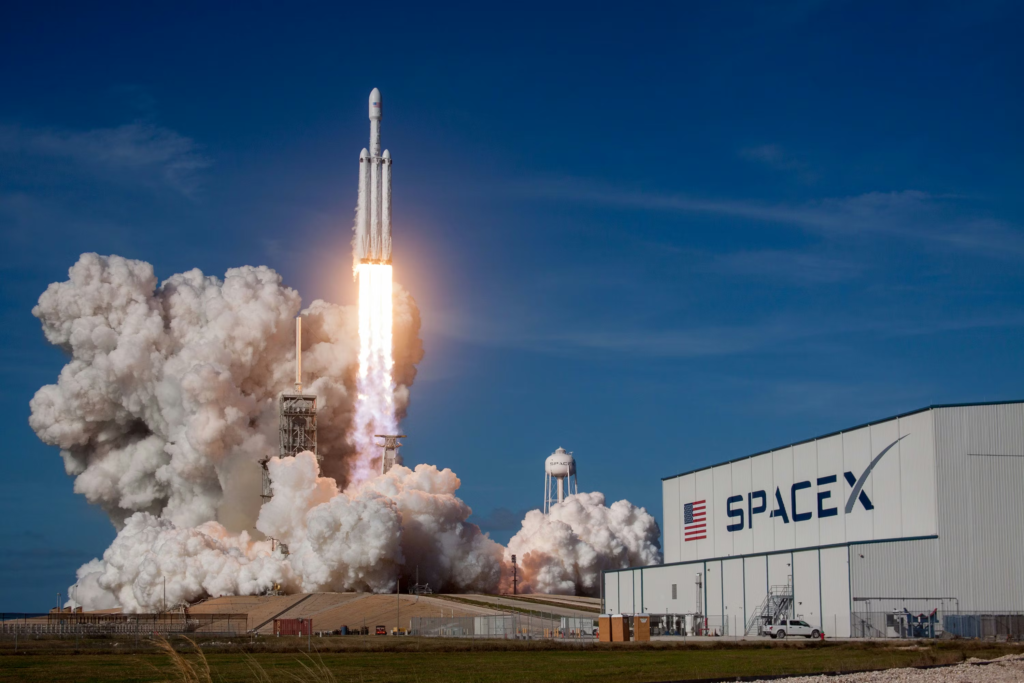
This has been made more of a problem due to the fact that SpaceX is not merely a privately-owned corporation specializing in commercial space travel. It has become highly intertwined with vital U.S. government functions over the past few years. The company has recently become a significant contributor to satellite communications, launching rockets and missiles, tracking systems, artificial intelligence in the military, and national security programmes.
The satellite internet project, Starlink, an initiative by SpaceX, has gained critical significance due to its monumental size. The network comprises approximately 10,000 satellites in low earth orbit that enable it to offer internet and communication services to remote locations where the traditional systems might fail. The military also has a communication tool that is more difficult to attack by the enemy due to this large network than the previous satellite systems.
This is one of the primary reasons why the Pentagon still relies so much on Starlink, even though it fails periodically, according to military experts. The system has global coverage, can be deployed quickly and at a lower cost than developing a comparable government owned satellite network. To military planners, access to such wide network of communication can spell the difference between a successful mission and a failed one.
Without Starlink, the U.S. government would not have an international network of communications in the low earth orbit, according to Clayton Swope a deputy director of Aerospace Security Project at the Center of Strategic and International Studies.
The challenge of that statement is the hard balance that the Pentagon is facing at present. On the one hand, Starlink offers features that cannot be easily substituted. On the other hand, depending too much on a single private company creates new vulnerabilities. In the event that the network comes down, is attacked by cybercriminals, or involved in technical issues due to a real military conflict, the outcomes might be far graver than a delayed test exercise.
This increased reliance is occurring amidst an unprecedented increase in the power of SpaceX. It is also said to be about to go out in a public offering later this year that may see it valued at approximately 2 trillion. Should it occur, then it would be one of the biggest and most valuable companies in the world.
Starlink is not the only tool that SpaceX has developed to establish a presence in the industry, its success in rocket launches. The company is now the most capable of providing launch services to both commercial clients and the United States government. It also has the task of transporting astronauts, satellites, military equipment, and scientific equipment to space.
SpaceX has also in recent years expanded into military specific services with Starshield, a more secure satellite network, which is aimed at national defense and intelligence operations. Starshield will have a more significant role in military communications, surveillance, and battlefield coordination in the future.
Meanwhile, other companies are attempting to take over the market that SpaceX currently controls. Amazon is also spending a lot of money on a satellite internet infrastructure of its own and recently signed a 11.6 billion deal to buy satellite company Globalstar. Nevertheless, even with the attempts, SpaceX continues to lead in the market of low-earth orbit communications significantly.
Domination by the company is also evident in space launches. A recent example is the U.S. Space Force allegedly moving an impending GPS satellite launch to a SpaceX rocket last month due to technical complications with the Vulcan rocket built by the joint venture of Boeing and Lockheed Martin, United Launch Alliance. It marked the fourth time that such a reassignment had occurred.
This recurrent motif to many observers underscores the lack of substitutes to SpaceX at the moment. Competition is a desire of government agencies, but in situations when other mechanisms are not able to perform their duties due to delays or technical issues, SpaceX is most likely to come to the rescue.
The Navy drone incidents have broader lesson as well. The current military systems are more digital, more connected and becoming more advanced than ever before. That has immense benefits, however, it also implies that communication breakdowns can rapidly be transmitted through a whole operation. Even minimal downtime can halt ships, halt missions, and postpone critical decisions.
Most analysts are of the opinion that the Pentagon will probably stick with Starlink since the advantages still surpass the disadvantages. The speed, reach and flexibility of the network are hard to find. Nevertheless, the Navy accidents might compel military authorities to develop backups in order to ensure that a single failure does not stop the completion of a whole mission.