When Milly Alcock first captured global attention as the young Rhaenyra Targaryen in House of the Dragon, she quickly became a standout face in a world filled with legacy and expectation. Now, as she prepares to take on the iconic mantle of Supergirl, the stakes feel even higher. The upcoming film, set within the evolving vision of DC Studios, has already sparked intense conversations online, long before its official release. Alcock finds herself navigating not only the demands of the role but also the growing scrutiny that comes with stepping into such a beloved character’s legacy.
There is something uniquely intense about superhero fandoms, especially when it comes to characters who have existed for decades across comics, television, and film. Supergirl, also known as Kara Zor-El, carries with her a history shaped by multiple portrayals and interpretations. Each version has left an impression, making any new casting decision a lightning rod for debate. Alcock appears fully aware of this reality. In a recent conversation, she acknowledged the inevitability of criticism with a calm honesty, stating, “I can’t really stop them. I can only be myself.” It is a simple line, but it reflects a grounded approach in an industry where external noise often threatens to overshadow personal conviction.
Her awareness of fan culture is not theoretical. During her time on House of the Dragon, Alcock witnessed firsthand how deeply audiences can invest in fictional worlds and the actors who inhabit them. That experience seems to have prepared her, at least emotionally, for what lies ahead. There is an understanding that admiration and critique often come from the same place of passion. Yet, as she points out, that passion can sometimes blur boundaries, particularly for women in high-profile roles. Reflecting on this dynamic, she remarked, “Simply existing as a woman in that space is something that people comment on. We’ve become pretty comfortable having this weird ownership of women’s bodies.”
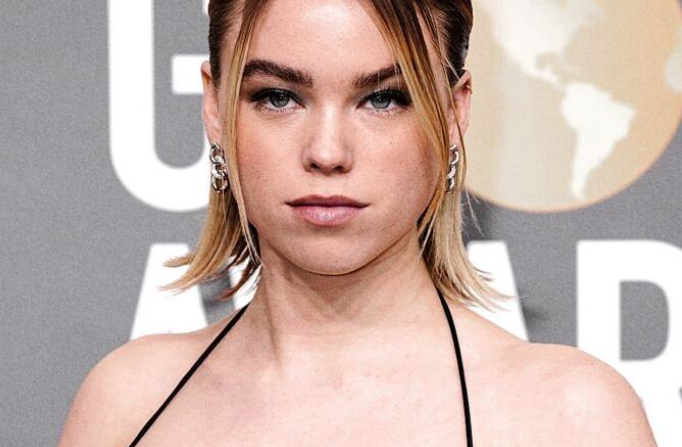
That observation resonates beyond the superhero genre. It speaks to a broader cultural pattern where visibility often invites unsolicited judgment, especially in digital spaces where anonymity amplifies boldness. Alcock’s words suggest both awareness and quiet resistance. Rather than attempting to control the narrative, she seems to be focusing on maintaining a sense of self. It is not a strategy built on confrontation but on endurance and authenticity.
At the same time, she does not shy away from admitting vulnerability. “Of course I’m scared. Of course, I want people to like me and the movie. But ultimately, it’s out of my control.” This candid acknowledgment feels refreshingly human in an industry that often prizes composure over honesty. It also underscores the emotional weight of stepping into a role that carries expectations not just from studios but from millions of fans worldwide.
Interestingly, Alcock has chosen not to seek guidance from previous actors who portrayed Supergirl, such as Melissa Benoist or Sasha Calle. Her reasoning is disarmingly straightforward. “They’re just people living their lives. It’s not like we have this blood bond,” she joked. The comment reflects a desire to approach the role on her own terms, without feeling tethered to past interpretations. It also hints at a broader truth about creative work: every actor ultimately brings something personal to a character, regardless of its history.
The decision to take on Supergirl was not entirely free of hesitation. Alcock has spoken about the uncertainty she felt early in her career, admitting, “I was so s**t scared that my life was over at 22. And, of course, it wasn’t.” That moment of doubt, though rooted in personal experience, mirrors a universal fear of failure and irrelevance. Choosing to step into a franchise of this scale can be seen as both a risk and a statement of belief in one’s own trajectory. In a way, it reflects a willingness to embrace uncertainty rather than avoid it.
The film itself, directed by Craig Gillespie and shaped under the creative leadership of James Gunn, promises a different take on the character. Drawing inspiration from the comic storyline Supergirl: Woman of Tomorrow, this version of Kara Zor-El is far removed from the traditionally optimistic portrayal audiences may expect. Instead, she emerges as a more complex and emotionally layered figure, shaped by trauma and loss. Having witnessed the destruction of Krypton, this Supergirl carries a sense of anger and purpose that drives her across galaxies.
Early glimpses of the film suggest a narrative that leans heavily into both spectacle and introspection. The story reportedly follows Kara as she teams up with a young girl named Ruthye, embarking on a journey fueled by revenge and justice. Along the way, the film explores themes of grief, identity, and resilience, set against a backdrop of expansive cosmic landscapes. There is also an element of unpredictability in this portrayal, with hints of a rebellious streak that sets her apart from previous versions. Scenes of interstellar travel, unfamiliar worlds, and even quieter, character-driven moments point toward a film that aims to balance visual scale with emotional depth.
For audiences, this shift could feel refreshing or divisive, depending on expectations. Superhero films often walk a delicate line between honoring tradition and redefining it. Alcock’s casting and the film’s darker tone signal a willingness to take creative risks, something that has become increasingly important in a genre that sometimes struggles with repetition.
As the release date approaches, the conversation around Supergirl is likely to intensify. Fan reactions, both supportive and critical, will shape the narrative surrounding the film long before its box office performance does. In that sense, Alcock’s approach feels particularly relevant. By focusing on authenticity rather than approval, she positions herself not as someone trying to meet every expectation, but as an artist navigating a complex and highly visible space.
Whether the film ultimately resonates with audiences remains to be seen. Supergirl’s legacy is both a strength and a challenge, offering a rich foundation while demanding reinvention. Alcock’s performance will inevitably be compared, dissected, and debated. Yet, her perspective suggests a quiet understanding that some aspects of public reception are beyond control.