A recent ruling from a Los Angeles court has brought renewed public attention to the long-running legal tensions between Kim Kardashian, Kris Jenner, and Ray J. In a decision that underscores the judiciary’s commitment to transparency, a judge denied Kardashian and Jenner’s request to keep certain legal documents confidential. These documents are tied to a 2023 settlement that has since become a focal point in an escalating legal dispute.
The matter revolves around an alleged agreement connected to the widely discussed controversy involving a past sex tape. While the issue itself is not new to public discourse, what stands out now is how it has resurfaced in a legal context, years after it was thought to be resolved. Kardashian and Jenner had approached the court seeking to seal records that they argued contained sensitive and private information. Their legal team maintained that these materials were never meant for public consumption and that disclosure could potentially affect their families.
In their argument, the lawyers emphasized the deeply personal nature of the agreement, stating, “The agreement resolved highly sensitive matters that the parties explicitly agreed to keep confidential in order to protect their families from public disclosure and respect these sensitive matters.” The statement reflects a broader concern often seen in celebrity legal battles, where the line between public interest and personal privacy becomes increasingly blurred.
However, the court did not find this reasoning sufficient. The judge concluded that Kardashian and Jenner had not provided compelling evidence to justify sealing the documents. From a legal standpoint, courts generally require clear proof that public disclosure would result in specific harm, not just discomfort or reputational risk. In this case, the judge determined that the threshold had not been met, thereby prioritizing transparency over confidentiality.
This ruling also followed opposition from Ray J, who challenged the request to seal the documents. His stance added another layer to the dispute, indicating that not all parties involved were aligned on maintaining confidentiality. As a result, the court ordered Kardashian and Jenner to submit unredacted versions of the agreement, effectively making the details accessible within the legal record.
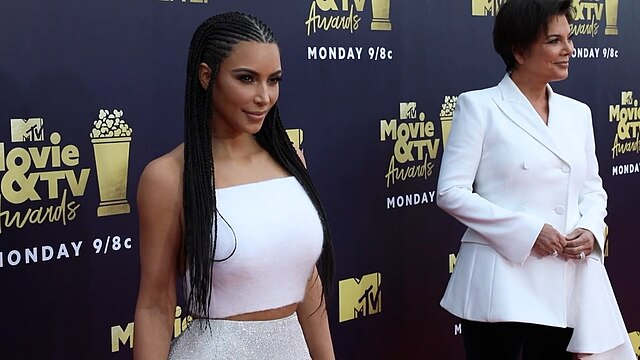
The origins of the current legal conflict date back to October 2025, when Kardashian and Jenner filed a lawsuit against Ray J. They accused him of defamation, specifically alleging that he made false claims suggesting that they were under investigation by federal authorities. Such allegations, if untrue, could have significant reputational implications, especially given their high-profile public personas. Kardashian and Jenner firmly denied these claims and sought legal recourse to address what they described as damaging statements.
Ray J responded with a countersuit that shifted the narrative. In his filing, he alleged that Kardashian and Jenner had breached a confidential agreement reached in 2023. According to his claims, the agreement included a provision that required him to remain silent about the sex tape controversy. He further alleged that he received $6 million as part of this settlement, a detail that has drawn considerable attention due to its scale and implications.
What complicates the situation further is Ray J’s assertion that Kardashian and Jenner violated this agreement by discussing the matter on their Hulu show. This claim introduces questions about the boundaries of confidentiality in the age of reality television, where personal narratives are often monetized and shared with a global audience. While the Kardashian family has built a brand around openness and storytelling, this case highlights the potential legal risks of revisiting sensitive topics that may be governed by prior agreements.
It is worth noting that Kardashian and Jenner have not publicly confirmed the alleged $6 million payment. Their request to seal the documents was partly based on the argument that the agreement contained private financial and personal information. From a practical perspective, such concerns are not uncommon in settlements involving public figures. Confidentiality clauses are often included precisely to prevent details from entering the public domain, thereby allowing all parties to move forward without prolonged scrutiny.
Despite these arguments, the court’s decision reflects a broader principle within the legal system. Transparency is generally favored, particularly when it comes to court proceedings. Judges are often cautious about sealing documents unless there is a clear and compelling reason to do so. In this instance, the lack of sufficient evidence to demonstrate harm played a decisive role in the outcome.
Importantly, this ruling does not determine who is right or wrong in the underlying dispute. It addresses only the question of whether the documents should remain confidential. The broader legal battle, including the claims of defamation and breach of agreement, is still ongoing. This means that further developments are likely, and additional details may emerge as the case progresses.
From a broader perspective, the situation offers a glimpse into how legal conflicts unfold in the public eye, especially when they involve individuals with significant media influence. It also raises questions about the durability of confidentiality agreements in an era where personal and professional boundaries are increasingly intertwined. For audiences, it serves as a reminder that even well-established narratives can resurface in unexpected ways, often bringing new complexities with them.