An iconic Hollywood history has silently passed through the hands in Los Angeles and this has attracted a new focus on the longstanding legacy of Audrey Hepburn. Her old house in Brentwood has sold at a staggering ninety four million, not merely the worth of real estate in one of the most desirable locations in the city, but also the eternal appeal of a house that is associated with one of the most popular representatives of the film industry. Hepburn has remained influential to the way people perceive what is elegant, simple and star-like even decades after her death.
This house is much more than a fancy house in the corner of Los Angeles. It symbolizes a unique attachment to a time when Hollywood possessed a certain aura of enigma and elegance. Stepping through its halls, one can near to envision the silent beat of an industry long gone, where people studied scripts in a dim light and made careers out of charisma and discipline alone. Such houses do not just exist as architectural spaces; they are silent spectators of scenes that have served to establish film history.
Hepburn did not start the story of the mansion, but her connection to it has certainly led to a greater cultural value of the mansion. The house already had an intellectual and artistic background, being initially owned by Mildred and Edwin Knopf who were associated with an aristocratic publishing family. Later it was owned by famous British actress Deborah Kerr and her husband, writer Peter Viertel. They brought another dimension of the history of the cinema to the house, even before Hepburn even stepped in the house.
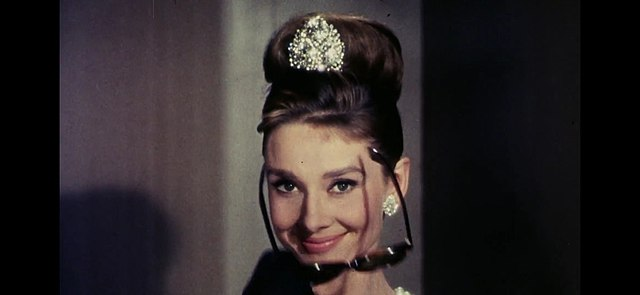
Remarkably, Hepburn never legally possessed the house, and her attachment to it is very poignant. She spent two major periods in this place when she was in the initial years of her career. During the spring of 1950, she resided in the house as she was getting ready to take a screen test to appear in Quo Vadis, a role that would end up in the hands of Deborah Kerr. Although she did not get that role, the short stay in the US was a progeny to Hepburn as she moved to become a global star. When she came back the next year, as she was preparing The Children Hour, she further cemented her attachment to the house. These moments, though fleeting, tie the home to the early ambitions and resilience that would later define her career.
The property, which had not been sold in the market in more than 30 years when it was listed in the market last year was priced at $10.9 million. The fact that it sold at $9.4 million at the end of the day is a sign that not only is this a reality of the market, it is a reality of historic properties. Buyers can bargain over price, but intangible value of such a home cannot be ignored. There is something very attractive about residing in a room that was inhabited by some people that have left an imprint in cultural memory. It is not merely ownership, but being a steward of a story.
The residence itself is a fine specimen of Georgian architecture, and is situated on a tract of about 31,000 square feet. The core of it is a 6,099-square-foot house that is both spacious and conservative. In contrast to most of the luxury houses in the modern world, which focus on size rather than on character, this house is a more discreet, elegant design. It denotes a design philosophy that appreciates proportion, detailing and harmony with the surrounding.
Interior The interior of the house is an exercise in discreet elegance. It has five bedrooms and six-and-a-half bathrooms, which are carefully planned to accommodate both comfort and classicism. The dining room stands out especially, with hand-painted Gracie wallpaper providing a delicate touch of artistry. A conservatory close by welcomes the natural light to come in, making it the perfect environment of a very peaceful evening or a romantic meeting. The arched ceilings of the kitchen and the windows that look out onto the garden make the atmosphere of the kitchen warm and welcoming.
The upper level has a main suite which serves as a sort of a personal retreat. It has two spa-bathrooms, large walk-in closets and a balcony, which faces the landscaped ground and gives a feeling of privacy in the bigger house. The living spaces are equally impressive with their considerate design handiwork in the basement. A guest suite will help to provide a visitor with comfort and privacy, and a family room will help to promote relaxed interaction. The natural light is also reflected in the main living room which is centred by a fire place and makes it look warm.
Going out, the view is one that matches the architectural beauty of the house. The grounds have well-tended rose gardens, a covered lanai with a fireplace and heating devices, and a swimming pool, which has been updated without losing its beauty. A little putting green on the house is a subtle yet sophisticated touch that helps to drive the point that the house is not only a place to live, but also a place to enjoy a lifestyle. One can only imagine scenes that play out here and which are cinematic in their own way.
The most interesting aspect of this house is the manner in which it connects the past and the present. It is not based on profligacy to impress. Rather, it finds power in its past, its design and the faint remnants of the people that once crossed its doors. In a city that can be characterized in many ways as reinventing itself, houses such as this provide a sense of continuity in that we still remember that the soul of Hollywood is part of its identity of authenticity and grace.
Simultaneously, the sale provokes some thought-provoking questions about the way we appreciate cultural heritage in the contemporary real estate. Although the association with Audrey Hepburn certainly increases the value of the property, it also brings out the general interest in celebrity history. Customers are not simply buying square feet, but stories with emotional and symbolic meaning. It is to be interpreted whether this trend can be seen as a sign of true appreciation or as a pursuit of prestige.
Preservation is also questionable. With such properties being transferred into new ownership, their future lies in the priorities of new owners. Will the historical nature of the home be well preserved or will it be eventually remodelled to suit the modern preferences? It is never easy to find a balance between celebrating the past and living in the present, especially in a city where change is the order of the day.