The 2026 Oscars will be remembered for many reasons, but for Teyana Taylor, the night carried a mix of triumph and tension. While her film One Battle After Another secured the coveted Best Picture award, an unexpected backstage confrontation quickly became one of the most talked-about moments of the evening. As videos of the incident spread across social media, Taylor addressed the situation with clarity, making it evident that while she celebrated her success, she refused to overlook what she perceived as disrespectful behavior.
The incident unfolded on March 15 at the Dolby Theatre, just moments after the ceremony had concluded. The atmosphere backstage was chaotic, as winners, executives, and crew members moved rapidly through tight spaces to capture post-show moments. According to multiple reports, Taylor was attempting to make her way back toward the stage area alongside executives from Warner Bros. for a group photograph when the situation escalated. In the crowded and fast-moving environment, a security guard allegedly shoved her, triggering an immediate and visible reaction.
Footage from the scene quickly circulated online, capturing Taylor’s response in real time. Clearly upset, she confronted the individual, saying, “Do not shove me. Do not touch me. Do not push me.” Her voice carried both frustration and firmness, cutting through the surrounding noise. In another moment captured in the same clip, she added, “You’re a man putting your hands on a female.” The intensity of her words reflected not only the physical discomfort of the moment but also a broader stance on personal boundaries and respect, especially in high-pressure environments like award shows.
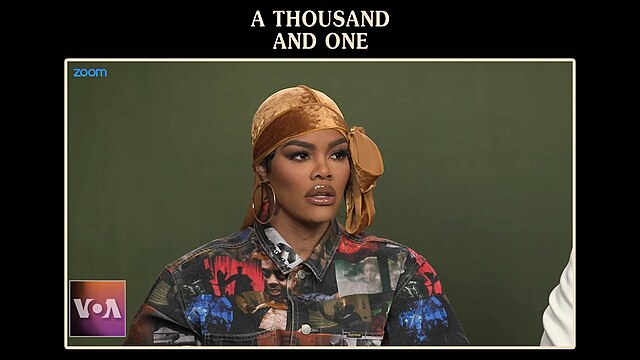
Observers present during the incident described the backstage area as tightly packed, with security attempting to manage movement while attendees navigated their own priorities. One witness noted that the guard appeared to physically block Taylor’s path, which contributed to how quickly the exchange escalated. Situations like these are not uncommon in large-scale events, where logistical control often collides with the expectations of high-profile guests. However, what made this moment stand out was Taylor’s immediate refusal to remain silent or passive.
In the hours following the incident, media coverage intensified, with outlets analyzing both the video and eyewitness accounts. Despite the growing attention, Taylor chose to address the matter in a measured yet assertive way. Speaking later, she acknowledged the chaotic nature of the situation while still defending her reaction. “Security was just doing a lot,” she said, offering a brief nod to the pressures faced by event staff. Yet she followed that statement with a more pointed remark, saying, “There’s always that one.”
Her tone suggested a balance between understanding and accountability, a perspective often shaped by years of experience in the public eye. Having navigated countless high-profile events, Taylor’s reaction did not come across as impulsive but rather as a boundary firmly drawn. She further reassured the public about her well-being, stating, “I’m perfectly fine. I’m happy,” before making her stance unmistakably clear with the words, “I just don’t tolerate disrespect, especially when it’s unwarranted and unprovoked.”
The response from the security side was swift, with the firm involved issuing an apology and confirming that the matter had been addressed internally. While details of any disciplinary action were not publicly disclosed, the acknowledgment indicated that the situation was taken seriously. In events of this scale, where precision and control are essential, even a single misstep can quickly become a focal point, especially when it involves a prominent figure.
From a broader perspective, the incident highlights the delicate balance between crowd management and personal dignity. Award ceremonies like the Oscars are meticulously planned, yet the human element often introduces unpredictability. For celebrities, who are expected to move seamlessly through these environments while maintaining composure, moments like this can feel particularly intrusive. Taylor’s reaction, in that sense, resonated with many who viewed the footage, as it reflected a universal expectation of respect regardless of status or setting.
There is also a deeper conversation to be had about how physical boundaries are respected in high-pressure professional spaces. Taylor’s statement, particularly her emphasis on not tolerating disrespect, echoed beyond the immediate incident. It touched on a broader cultural shift where individuals are increasingly vocal about asserting personal space and dignity, even in environments where chaos is normalized. Her words did not feel rehearsed or calculated; they carried the weight of someone unwilling to compromise on a fundamental principle.
At the same time, the situation invites reflection on the challenges faced by security personnel tasked with maintaining order in unpredictable circumstances. Their role often requires quick decisions and physical intervention, which can sometimes be misinterpreted or mishandled. The incident underscores the importance of training and awareness, ensuring that authority is exercised without crossing personal boundaries.
For Taylor, the night ultimately remained one of professional achievement. Winning Best Picture is a milestone that defines careers, and her involvement in One Battle After Another marked a significant moment in her journey as an artist. Yet, the viral confrontation added an unexpected layer to the narrative, reminding audiences that even moments of celebration can be interrupted by tension.
Public reaction to the incident has been mixed, with some supporting Taylor’s stance as a necessary assertion of respect, while others have pointed to the complexities of managing large crowds. The video, viewed millions of times, became a space where opinions converged, reflecting broader societal attitudes toward authority, gender dynamics, and personal boundaries.