In an industry often defined by carefully staged appearances and constant media attention, it is the unscripted, human moments that tend to resonate the most. At the Gold House Lunar New Year Party in New York City, Lola Tung and Hudson Williams offered exactly that kind of moment, one that felt genuine, spontaneous, and deeply refreshing. What began as a cultural celebration quickly turned into a widely shared highlight, not because of red carpet glamour, but because of a simple, joyful dance that captured the attention of audiences online.
While celebrity culture often emphasizes perfection and polish, this particular moment stood out for its authenticity. Videos that surfaced from the evening showed Lola Tung and Hudson Williams dancing freely, without the stiffness that typically accompanies public appearances. There was no performance to deliver, no script to follow, just two individuals enjoying music, connection, and the energy of the room. It served as a reminder that even in high-profile spaces, the most memorable experiences often come from letting go.
The event itself was designed to celebrate Asian Pacific culture and bring together creatives from across industries. Organized by Gold House, the gathering featured more than 200 artists, actors, and cultural leaders. Hosted at the iconic Chinese Tuxedo on February 12, 2026, the venue was transformed into a vibrant space filled with traditional elements such as red lanterns, curated cuisine, karaoke setups, and even mahjong tables. It was not just a party but a carefully curated cultural experience that emphasized identity, community, and shared celebration.
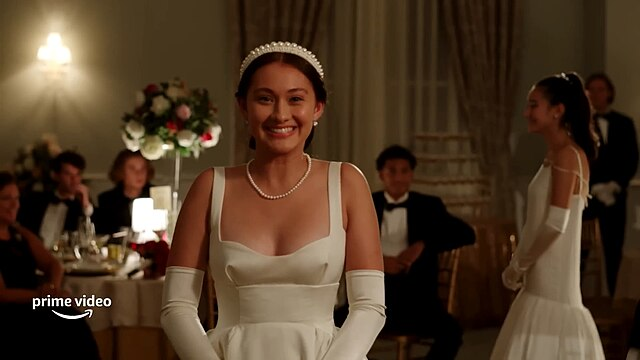
Within this lively setting, Lola Tung found herself immersed in an atmosphere that felt both festive and grounding. While speaking about the experience during promotions for her film Forbidden Fruits, she reflected on the deeper meaning behind the night. “There’s something really special about meeting people in the same crazy whirlwind you’re in. I met Hudson, and Yerin Ha, too, at that party. When you’re all in the same boat, you just get it. You check in with each other—‘Hey, are you okay? Need anything? Wanna just dance and have fun?’ Sometimes you really need that.”
Her words reveal more than just a casual encounter; they highlight the emotional support systems that often form behind the scenes in demanding industries. Events like these are not merely social obligations but serve as spaces where individuals can momentarily step away from professional pressures and connect on a more personal level. For Tung, the evening represented a sense of belonging, especially within a community of Asian American and Pacific Islander creatives who share similar journeys and challenges.
The dance itself, which later became widely circulated online, was not planned or choreographed. Instead, it emerged naturally from a shared impulse to enjoy the moment. As Tung described, “With Hudson, it was like, ‘I really wanna dance—do you?’ And he was totally down. Which is rare, honestly, because most parties are work events or there are cameras everywhere. But he was all-in—‘Let’s just enjoy it. Let’s have a moment.’ Even though, yeah, people pull out their phones and post everything online, we were just in it, having fun. And then we got everyone else to join us—‘Come on, everybody, let’s dance!’”
This sense of collective participation became one of the defining features of the night. What started as a spontaneous interaction between two individuals gradually extended to the broader crowd, creating an atmosphere that felt inclusive and celebratory. It is not uncommon for such gatherings to remain segmented, with attendees sticking to familiar circles. However, the energy on the dance floor appeared to dissolve those boundaries, encouraging others to join in and contribute to the shared experience.
Hudson Williams, who also co-hosted the event alongside Yerin Ha, played a central role in shaping the evening’s tone. Beyond hosting duties, he engaged actively with guests, moving through conversations, celebrations, and, of course, the dance floor. The night also marked his 25th birthday, adding another layer of personal significance to the festivities. His willingness to embrace the moment, rather than maintain a detached or formal presence, contributed to the relaxed and joyful atmosphere that attendees later spoke about.
Lola Tung’s presence was equally impactful. Dressed in a striking red outfit that complemented the festive theme, she brought a vibrant energy that was difficult to ignore. Yet it was not just her appearance that stood out; it was her openness to engage, to let go, and to fully participate in the celebration. In many ways, her approach mirrored a broader shift within the entertainment industry, where audiences are increasingly drawn to authenticity over perfection.
The evening also included smaller, meaningful interactions that added to its charm. Tung reunited with Sean Kaufman, her co-star from the popular series The Summer I Turned Pretty, further emphasizing the sense of community that defined the gathering. These moments, while less visible than the viral dance clips, contribute to the deeper narrative of connection and shared experience that the event fostered.
From an observer’s perspective, what makes this story particularly compelling is not the virality of the videos but the authenticity they represent. In an era where public moments are often curated for maximum impact, instances of genuine joy feel increasingly rare. The dance between Lola Tung and Hudson Williams was not intended to become a headline; it simply reflected a moment of freedom within a structured environment.
At the same time, the rapid spread of these clips across social media raises interesting questions about the nature of privacy and public life. Even in moments intended to be personal, the presence of smartphones ensures that nothing remains entirely private. While the visibility brought positive attention in this case, it also highlights the delicate balance celebrities must navigate between authenticity and constant exposure.