The electric vehicle market in the world might be at the verge of a significant breakthrough following the announcement of a new type of battery technology by Chinese vehicle manufacturer BYD which it says will enable electric vehicles to travel a distance of up to 1,200 kilometers on a single charge. In case the claims made by the company come true in a real-life driving scenario, the development could dramatically change the expectations regarding the performance of EVs and put new challenges on the competitors, including Tesla.
BYD announced it at its headquarters in Shenzhen, China, where the firm provided initial specifications of what it is labeling as one of the longest-range EV battery systems that it is presently working on. To a large number of potential buyers, the concept of covering a distance of over a thousand kilometers without having to recharge instantly draws attention. The issue of running out of charge during long distances drives has always been suspected as one of the most frequent worries of electric vehicle drivers, and it is a phenomenon known as range anxiety.
Industry observers believe that the breakthrough of this psychological barrier has been one of the last obstacles in mass EV adoption. When speaking to drivers who wonder about the possibility of becoming an electric vehicle user, one may hear the same question most of the time: what is the maximum distance of the vehicle before the next charging station? The recent statement of BYD seems to respond to this question in the theatrical manner.
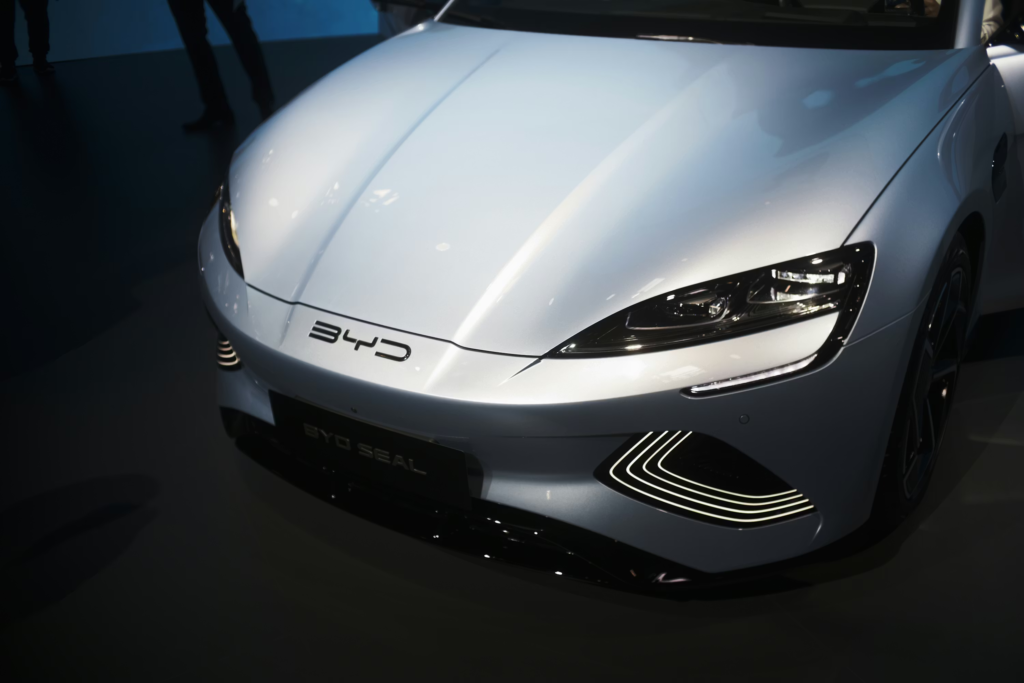
The company claimed that the new battery was capable of enabling vehicles to cover a distance of up to 1,200 kilometers, or approximately 745 miles, with one charge of the battery in official test conditions. In order to see that distance, a driver would theoretically be able to move between some of the largest cities without needing to recharge his/her car. Such a feature would be a significant change in practicality to long-distance drivers or even people residing in places where charging stations are still absent.
The numbers are however being looked at with cautious optimism by experts. The range estimate was given by using the CLTC testing standard of China that would give higher efficiency rates than the other testing systems in the world. The analysts think that the range is possible is achieved will be more realistic to something between 900 and 1000 kilometers when the more realistic conditions of driving are considered, including highway speeds, using climate control, and varying conditions of the terrain. The performance would still be good even at the adjusted levels that would be far better than most of the electric vehicles in the market as of today.
The core of the breakthrough seems to be a mixture of the long-established BYD Blade Battery architecture with the aspects inspired by the solid-state battery design. The Blade Battery is already making headlines in the EV industry with its structural design in which the cells are designed in the form of a long flat design that is more space-efficient yet enhances safety.
In the meantime, the concept of solid-state batteries has been actively debated as one of the subsequent milestones in the energy storage technology. Solid-state systems have solid materials as opposed to the liquid electrolytes used in the traditional lithium-ion batteries, thus being able to hold more energy in a smaller area. It has always been the belief of researchers that such a solution would help in minimizing the chances of overheating as well as enhancing the battery life and energy density.
Even though BYD has not provided the technical details of the new battery pack, the direction of the company indicates a more comprehensive change taking place in the EV market. The world is competing with automakers and battery developers to come up with technologies that could provide longer range of driving without necessarily increasing weight and cost on the vehicles.
Charging performance of the battery is another feature of the announcement which attracted huge attention. Reportedly, early reports indicated that the new system will have the ability to charge between 10 percent and 80 percent within about 10 to 15 minutes. When that potential is commercially realized, it would substantially reduce the amount of time needed to charge the battery, and allow the act of driving an electric vehicle to seem much more like filling a conventional gasoline-powered vehicle.
The concept of charging time has also become one of the most significant battlegrounds in the EV industry. The initial electric cars were also prone to take hours to recharge, which put many drivers off buying them as their main mode of transport. The waiting times have gradually reduced over the last 10 years because of advancements in fast charging technology, yet most drivers still consider charging as inconvenient as replenishing a fuel tank.
When BYD battery really performance reaches the charging rates that the company implies, the drivers may start to encounter electric charging stations that will seem more of a short stop at a highway rest station than a long stop in their trip. Such a change of mindset may have a significant impact on persuading potential customers that electric cars can be used in daily life.
The news has also sparked an increase in the comparison between BYD and Tesla, which is an American-based company that has been dominating the international discourse on the subject of electric mobility for a long time. The current flagship models of Tesla such as the Model S Plaid have driving ranges in which the average range is between 650 to 700 kilometers based on the road conditions and driving fashion.
In case or if the technology of BYD performs at least half of what it claims to do, it would provide a decisive numerical edge in the range of driving. Although range is not the sole factor by which one of the companies can become the leader of the EV market, it is one of the most conspicuous factors that consumers focus on when comparing vehicles.
In addition to the battery, analysts often refer to the manufacturing strategy of BYD as one of the strongest points. BYD has a well developed production system, unlike the other automakers that have been much dependent on external suppliers. The company has developed much of its battery components on its own, and this has provided the company with more control in terms of costs, supply chains, and technological testing.
Such integrated organization enables BYD to respond fast in the event that new technologies appear. It also provides the company with flexibility to scale production at a more efficient level once a design has been found to be commercially successful. With the world switching to electric vehicles at an increasing rate, the capability to produce batteries in large quantities may take the same significance as the performance of batteries does.
Nevertheless, a lot of questions are still not answerable. The firm has also not disclosed the time of vehicles with the new battery will be involved in the mass production and the impact of the technology on pricing of the vehicles. Long range batteries may cost a lot of expensive material and engineering that may affect the ultimate cost of the car.