For many actors shaped by the fast-moving energy of Hollywood, stepping away often signals a quiet exit. But for Adrian Grenier, known for his roles in The Devil Wears Prada and Entourage, the story feels different. His possible return to acting is not about chasing relevance or reclaiming past fame. Instead, it reflects a deeper shift in priorities, where personal values, family life, and a commitment to sustainability now shape every professional decision he considers.
In recent conversations, Grenier has made it clear that he is open to returning to acting more consistently. However, this willingness comes with a firm condition that reveals just how much his life has changed over the years. Rather than relocating or immersing himself again in the demanding rhythms of Los Angeles, he prefers projects that align with his current lifestyle in Texas. This is not a temporary preference but a conscious choice rooted in how he now defines success and fulfillment.
Grenier’s move away from California in 2020 marked a turning point. Leaving behind the industry hub where he built much of his career, he settled in Bastrop, Texas, on a 46-acre farm designed around sustainable living. The transition was not merely geographical but philosophical. Life on the farm allowed him to reconnect with nature, slow down his pace, and focus on what he describes as a more grounded way of living. Over time, this environment has become central to his identity, making the idea of returning to a location-dependent career far less appealing.
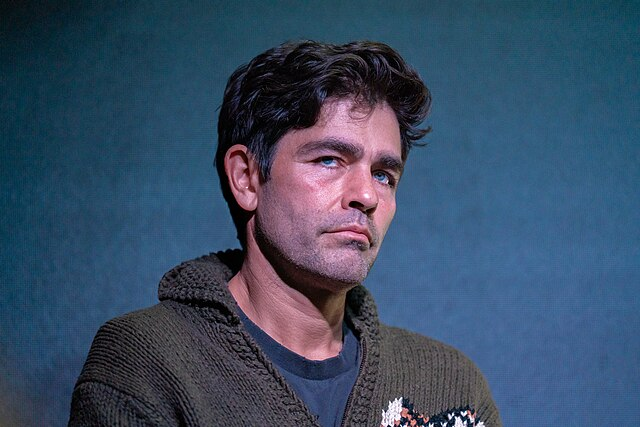
Family plays a decisive role in this shift. Grenier now shares his life with his wife, Jordan Roemmele, and their two young sons. The presence of a young family has naturally influenced his outlook, bringing a sense of responsibility and stability that contrasts sharply with the unpredictability of film schedules. His recent statements reflect this grounding, particularly when he said, “The truth is, the industry is moving to me.” He added, “They’re building three movie studios not too far from me. I don’t see any reason why we couldn’t just continue to film in Texas.” His words suggest not only optimism but also a broader industry trend that is making his preference increasingly realistic.
The expansion of film production beyond traditional centers like Los Angeles and New York has opened new possibilities for actors seeking flexibility. Texas, in particular, has been steadily developing its production infrastructure, attracting filmmakers with incentives and space to build large-scale studios. For someone like Grenier, this shift offers the rare chance to balance professional engagement with personal commitments. His perspective is practical rather than nostalgic. He is not waiting for the industry to return to what it once was; he is adapting to what it is becoming.
Despite his reduced on-screen presence in recent years, Grenier has not completely stepped away from creative work. His latest project, a short film titled Self Custody, reflects both his interests and his evolving values. Shot in Austin, the film is described as a bitcoin-themed action thriller, blending contemporary themes with a more experimental format. The project stands as an example of how he is approaching his career now, choosing roles that resonate personally rather than accepting every opportunity that comes his way.
This selective approach is something Grenier openly acknowledges. He explained, “At the end of the day, I really only take roles that reflect my values or that speak to me in some way.” He added, “I’m in a position, luckily, where I don’t have to take what I can get.” These statements reveal a level of professional independence that many actors strive for but few fully achieve. With years of experience behind him, Grenier now has the freedom to prioritize meaning over momentum, a shift that often comes only after navigating the highs and pressures of mainstream success.
At 49, Grenier’s perspective carries the weight of both experience and reflection. His earlier work, especially in projects like The Devil Wears Prada, brought him widespread recognition, but it also came with its share of public scrutiny. His character Nate, in particular, became a subject of debate among audiences, with some viewers expressing strong opinions about his role in the story. Looking back, Grenier has acknowledged that missing out on the film’s sequel was “a disappointment,” while also hinting that audience reactions may have influenced that outcome.
Even so, there is no sense of regret dominating his narrative today. Instead, what stands out is a deliberate recalibration of priorities. He is no longer driven by the need to remain constantly visible or to compete within the industry’s fast-paced environment. His focus has shifted toward sustainability, both in terms of his personal life and the projects he chooses to engage with. This alignment between values and work is something many public figures speak about, but Grenier appears to be actively living it.
There is also a subtle but significant cultural shift reflected in his story. As more creatives move away from traditional industry hubs, the idea of a centralized entertainment capital is slowly evolving. Technology, remote collaboration, and regional production growth are reshaping how and where films are made. Grenier’s situation highlights how these changes can empower individuals to design careers that fit their lives, rather than the other way around.
At the same time, his approach raises interesting questions about the future of stardom. Can actors maintain relevance while stepping away from the spotlight? Does proximity to major production centers still define opportunity in the same way it once did? Grenier’s choices suggest that the answers may be changing, even if the transition is gradual.