The United States is also getting ready to expand its investigation into Chinese tech corporations, and it is projected that the authorities would incorporate Alibaba and a number of other major corporations to a Pentagon list of businesses purportedly associated with the military apparatus in China. The decision is an indicator of a new tightening of the belt of Washington towards Beijing when economic and strategic tensions are boiling under the shaky trade agreement.
The government, according to those who have been privy to the backroom deliberations, will issue more Chinese companies on what is popularly referred to as the 1260H list. The list, which is managed by the U.S. Defense Department, singles out those companies that are suspected by the Pentagon to have connections to the military machinery of China. Although inclusion does not necessarily lead to economic sanctions, it has long term effects. The defense agencies in the U.S. will soon not be allowed to enter into a contract or purchase goods and services of those entities that are listed on the list due to the legislation passed recently.
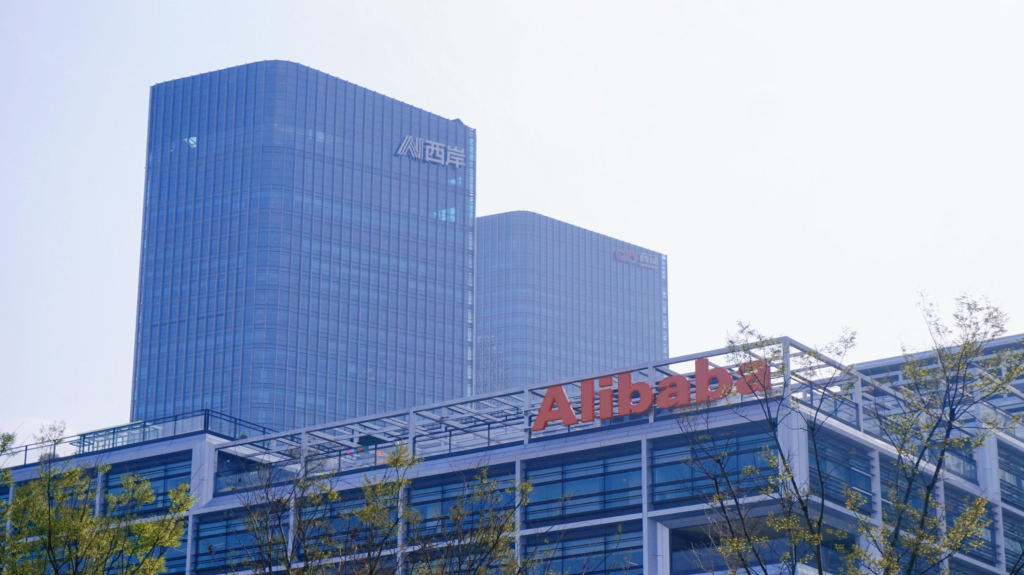
The list of the companies that have been mentioned to be under consideration includes the name of Alibaba Group Holding Ltd which is one of the largest technology conglomerates in China and an international leader in the field of e-commerce and cloud computing. The prospective entry of Alibaba highlights the widening of Washington attention beyond conventional defense makers to commercial technology venues, the magnitude, and information capacity of which are viewed as strategic-influential.
The 1260H classification used by the Pentagon is not an attempt to give a direct punishment, but a strategic message. Decision making in the field of defense procurement shows more of the wider geopolitical priorities. The inclusion of a company on the list draws the attention of American government suppliers and contractors to the fact that the U.S. military considers the firm a part of the Chinese defense ecosystem, either directly or indirectly. In the case of the multinational corporations working internationally, reputational and compliance factors can rapidly gain equal influence with real restrictions.
It is not the first occasion that the big Chinese corporations would be facing the scrutiny of the Americans. Some of the list already contains Tencent Holdings which is a technology giant, the one that dominates social media and the gaming industry, and Contemporary Amperex Technology Co Ltd also commonly called CATL, an electric vehicle battery manufacturer. At the time of addition of Tencent, the company insisted that it would not affect its operations and proceeded to a reconsideration process. CATL equally replied that it was not participating in any military-oriented operations but rather it was a commercial battery manufacturer that catered to the civilian market of electric vehicles.
The inclusion of Alibaba on this list will be a major escalation on the symbolic aspect of U.S.China technology competition. The cloud platform, artificial intelligence, and data-centred platforms make Alibaba the core of the Chinese digital economy. Washington has grown to view large technology businesses as a subset of a greater strategic context, as opposed to wholly a product of the private sector, especially in the areas of AI, semiconductor editing, and high-level computing.
The time the expected update should take place is especially delicate. In October, Chinese President, Xi Jinping and U.S. President, Donald Trump agree to what many observers called a temporary truce in trade. That accord was generally considered as a move to stabilize economic relations following years of tariffs, export restrictions and mounting rhetoric. A continuation of the list of military-related businesses may put a burden on the already tenuous truce, particularly when Beijing heeds the move as a political message and not a technical evaluation.
The legislators in the U.S. have been very critical about the expansion of firms that are to be scrutinized. In December, the Congress members have written a letter to the Defense Secretary Pete Hegseth calling on the addition of some high-profile Chinese technology companies. Some of the mentioned names included AI company DeepSeek, Xiaomi which is a smartphone maker, and BOE Technology which is a display maker. According to the arguments of legislators, businesses involved in cutting-edge technology, which can have both dual-use purposes, should be more carefully scrutinized in terms of national security.
These policy discussions revolve around the idea of dual-use technology. Defense modernization can also be supported by innovations created commercially, including machine learning algorithms or high-tech components in semiconductor. In the eyes of Washington, exposure to companies that are deemed as enhancing Chinese military power is one of the ways to curb exposure to a larger scheme of technological containment. In the perspective of Beijing, such actions are commonly depicted as trying to punish the economic upsurge of China in the disguise of security.
The line between business and national security has been permeable over the last ten years. Large datasets, which can be used to train AI models, exist in the cloud computing platforms. Both the unmanned systems and the electric cars are powered by advanced batteries. The uses of high-resolution displays and sensors are in consumer electronics, as well as surveillance equipment. In this regard, American policy makers say that there is the need to be vigilant in order to avoid strategic vulnerability of the defense supply chains.
Simultaneously, critics warn that the excessive growth of such lists can cause the commercial business to be drawn into the geopolitical conflicts thus destabilizing the markets of the world. The United States is not the only country where many of the mentioned firms make a lot of money through foreign patrons. Their technologies support daily consumer experiences, including online shopping and online payment, as well as electric vehicles and the entertainment platform.
In the case of such companies as Alibaba, the practical consequences might be slow developing. Although the consequence of being put on the 1260H list does not necessarily elicit the immediate consequences of the sanctions, the reputational impact may affect the investors, partners, and regulators globally. When the compliance risks become elevated, multinational corporations tend to review joint ventures or technology alliances. The supply chain decisions can change even before the prohibition has been instituted in highly connected industries as perception changes.
The larger story can be seen as a change in the relationship between the U.S. and China. The former relationship was characterized by economic interdependence and the two countries focused on trade development and integrating the supply chain. Strategic competition in the state of high technology has become the theme today. Artificial intelligence, digital infrastructure, battery technology, and semiconductors are now at the intersection of business and national security.
It is still unclear whether the entry of Alibaba and other companies will significantly alter the trends in the defense procurement. What is evident is that gestures are symbolic and have a power in a world that is defined by distrust and strategic competition. In the case of the policymakers the aim is to mitigate perceived risks. In the case of corporations, it becomes a matter of maneuvering in the environment where business expertise and geopolitics are getting more and more closely linked.