The Odyssey, a new movie by Christopher Nolan, has been slowly gaining momentum in anticipation but few positive comments made by someone in the inner circle of genius has taken it to another level. Jonathan Nolan, the renowned author, filmmaker, and long-time partner, and the brother of the director of Christopher Nolan has already said that the movie is spectacular, which gives a hint of the magnitude and the grandeur that audiences will experience once the mythological epic hits cinemas in July.
The response has specific gravity since Jonathan Nolan is not just family but also reputed as a storyteller in his own right, having worked on narrative complex, idea-oriented work in both film and television. His praise does not come across as promotional clatter so much as it does as a heartfelt reaction of a man who knows what it would be like to attempt a final retelling of one of the most iconic epics in Western literature, to feel the pressure and stress involved and realize what he is getting himself into.
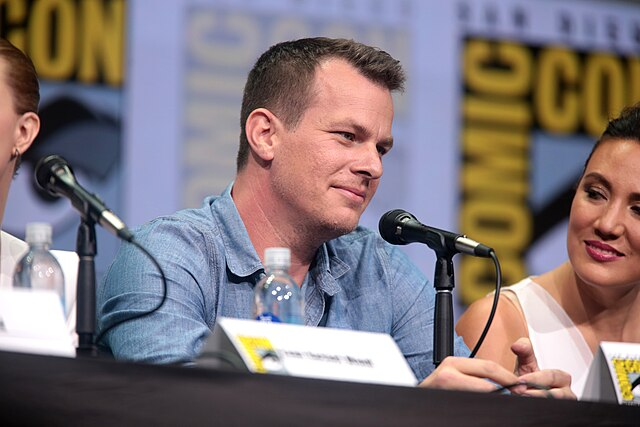
Jonathan Nolan has recently affirming that he has read The Odyssey, so he is one of the few extraneous sources to provide a knowledgeable response to the adaptation. He was keen to make it clear that he has no creative input in the project, which only enhances the validity of what he is saying. In an open manner, he stated that he was not working on The Odyssey. I have seen The Odyssey. It’s tremendous. It is something unbelievable… The Iliad and The Odyssey fascinated me when I was younger, and I was having some fun with Chris as to where he is going with it. It’s a spectacular film.” It sounds less like a well-crafted sound bite and more like a personal observation by being impressed as a child and being respectful of a profession.
It is significant that feeling of life-long attachment to the Homer work. The Odyssey is not just another blockbuster of Christopher Nolan but a work of roots in the history of literature, the culture, and the ambition of the film. To most filmmakers, adapting such a text would be intimidating because of its volume, episodic form and philosophical richness. Nolan has, nevertheless, made his career out of working on seemingly unadaptable concepts, whether it be dense dream worlds or non-linear war stories and non-black-and-white historical wonders.
The movie is also a continuation of the next big step of Christopher Nolan after the unprecedented success of Oppenheimer in 2023. Not only did the film sweep awards season and win seven Academy Awards, but it also demonstrated that movies could be intelligent and work at the international box office, bringing in close to USD 975 million of revenue in the world market. The follow-up to that success was bound to be a high one, expectations on Nolan increased. This is evidenced by the fact that Nolan announced The Odyssey in December 2024, indicating that he was now willing to move out of modern history and into the realm of ancient myth without losing the seriousness and grandeur that characterize his work.
The Odyssey, due to be released on July 17, is the next effort on the part of Nolan to keep with theatrical spectacle, especially large-format and Imax displays. Such commitment is not just technical but philosophical. Nolan has been long contending that film must be monumental, absorbing and worthy of the big screen. A mythological epic, with its gods, monsters, travels and moral trials, fits that vision quite naturally.
The most interesting part of this adaptation is what Nolan said as a reason why he decided to adopt the project. In one past interview, he looked back on how there were no films nowadays of the scale of mythological films that took ancient stories not too seriously but with seriousness. He said, as a filmmaker, you strive to find voids in cinematic culture; things that had not been previously done. And what I realized is that all of this huge mythological cinematic work that I had been growing up with Ray Harryhausen films and others I had never actually seen it done with as weight and credibility as a A-budget and a massive Hollywood Imax production could have. This clues us in on the fact that The Odyssey is not about nostalgia in itself but about that of restating myth as serious cinema.
It also has a bigger industry context. Over the past few years, Hollywood has been propping on franchises, re-booms and known intellectual properties. Mythological narrations which used to be a main source of epic film making have been relegated to the tabloid fantasy or television shows. The Odyssey by Nolan seems to be a corrective one that tries to bring mythology back to the center of the screen in terms of emotional verisimilitude, philosophical seriousness, and technical virtuosity.
This desire has been achieved in the sense that it has not been just an intention as the reaction of Jonathan Nolan indicates. The fact that he mentioned weight and credibility also repeats the words his brother used, indicating that the movie approaches its source without being disrespectful towards it, instead adapting it to the needs of modern viewers. To those who have read the original epic, this would be interesting to ask how the theme of homecoming, identity, temptation and endurance would be played on screen.
Meanwhile, one can mention the risks involved. The process of adapting a text that is considered sacred like The Odyssey, begs questioning among scholars, classicists and even among ardent readers. The interpretation offered by Nolan is bound to be subject to controversy especially in the aspects of which episodes are highlighted and the manner in which the aspects of deity have been included in a realistic cinematic manner. However, Nolan has a career history that indicates that he does not mind working in this tension whereby complexity and ambiguity is tolerated instead of trying to come up with stories that people can easily digest.
With July coming near, the discussion about The Odyssey keeps on expanding, not due to the intensive advertising, but the prudent use of language by respected sources. The fact that Jonathan Nolan calls the film tremendous and incredible achievement is very high, and it also positions the project as something bigger than entertainment. It makes the film a cultural history, cinematic tradition and power of a storytelling that is intertwined.