At the peak of global fame, when the world seemed eager to cast him in anything remotely magical, Daniel Radcliffe found himself listening to one of the strangest pitches of his career: a remake of The Wizard of Oz starring the three young leads of Harry Potter and the Philosopher’s Stone. Looking back years later, Radcliffe did not hesitate to admit what he thought of the idea. “I don’t know a lot about the world, but this is a bad idea. This should not be made.”
He shared this memory during a February 2026 appearance on the popular interview series Hot Ones, where celebrities answer questions while eating increasingly spicy food. Between laughs and visible disbelief at how surreal his teenage years were, Radcliffe recalled how he was only 14 or 15 when the proposal landed in front of him. At that age, most teenagers are worried about exams or school friendships. Radcliffe, meanwhile, was navigating scripts, studio meetings, and ambitious reimaginations of cinematic classics.
The pitch itself sounded almost like a parody. The idea was to reunite Radcliffe with his co-stars Emma Watson and Rupert Grint, whose on-screen chemistry had already turned them into one of the most recognizable trios in modern film history. Watson would reportedly take on the role of Dorothy. Grint was assigned another part, though Radcliffe admitted he could not remember exactly which one. As for himself, he was to play the Cowardly Lion. Not the gentle, timid lion audiences remember from the 1939 film, but a karate-kicking version of the character.
“I was like a karate-kicking Cowardly Lion,” Radcliffe said, still amused by the absurdity of it all. The image alone feels like something out of a late-night comedy sketch rather than a serious studio production. Yet in the early 2000s, when the Harry Potter phenomenon was reshaping the global box office, such ambitious crossover concepts were not entirely unimaginable. Studios were eager to capitalize on the popularity of young stars who could attract massive audiences worldwide.
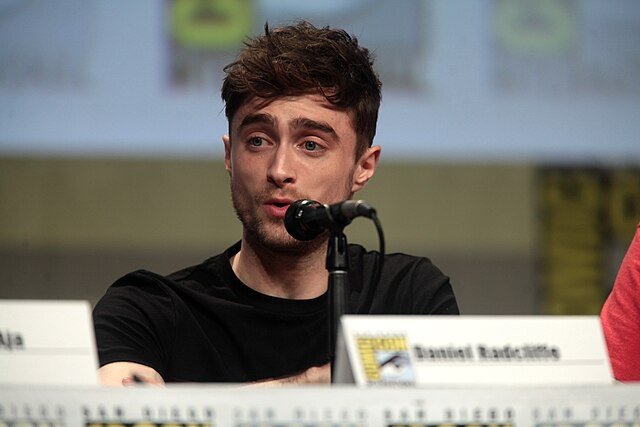
The early 2000s marked an extraordinary chapter in Radcliffe’s life. From 2001 to 2011, he was the face of a franchise that defined a generation. Harry Potter and the Philosopher’s Stone introduced him to millions, and each subsequent installment deepened both his fame and the emotional connection audiences felt toward him. For a young actor, that level of recognition can be both thrilling and overwhelming. Offers pour in from every direction. Some are carefully thought out. Others are driven by marketing logic rather than creative integrity.
In hindsight, Radcliffe’s instinctive rejection of the Wizard of Oz remake speaks volumes about his early maturity. “I was like 14 or 15, and I was like, ‘I don’t know a lot about the world, but this is a bad idea. This should not be made.’” The quote reveals a young actor who, despite limited life experience, trusted his creative judgment. It is not easy for a teenager to push back against powerful adults in the film industry. Yet Radcliffe recognized that some projects, no matter how commercially tempting, simply do not feel right.
There is also a broader cultural dimension to this story. The original 1939 adaptation of The Wizard of Oz holds an iconic place in film history. Its imagery, music, and performances are deeply woven into popular culture. Remaking such a beloved classic requires sensitivity and a clear artistic vision. Transforming the Cowardly Lion into a martial-arts action figure would likely have felt jarring to audiences who cherish the original’s charm and emotional sincerity. Radcliffe may not have articulated it in industry jargon at the time, but his reaction suggests an intuitive understanding of that risk.
What makes this anecdote particularly compelling is how it contrasts with Radcliffe’s later career choices. After the Harry Potter series concluded, he consciously stepped away from predictable blockbuster roles. Instead, he embraced theatre, independent films, and unconventional characters. From intense stage performances in London and New York to quirky, genre-bending films, Radcliffe demonstrated that he was not interested in being permanently boxed into fantasy archetypes. In many ways, declining a flashy Wizard of Oz remake was an early sign of that independence.
There is something refreshing about hearing a major star openly admit that not every opportunity is worth taking. In an industry where momentum can feel all-consuming, knowing when to say no can be just as important as knowing when to say yes. Radcliffe’s story offers a subtle lesson about discernment. Fame creates pressure to maintain visibility, but longevity often depends on thoughtful decision-making.
The proposed remake never materialized, and the Harry Potter trio did not reunite on screen for such a project. Instead, each actor pursued distinct paths. Watson became known for roles that balanced commercial appeal with social awareness. Grint explored television and smaller film projects. Radcliffe carved out a reputation as a risk-taker unafraid of odd, challenging material. Looking back, the karate-kicking Cowardly Lion now feels like a curious footnote in Hollywood’s endless stream of “what if” ideas.
Stories like this also reveal the strange machinery behind the entertainment industry. When a franchise becomes a cultural force, executives often try to recreate that magic elsewhere. Sometimes it leads to inspired reinvention. Other times, it produces concepts that feel more opportunistic than artistic. Radcliffe’s blunt teenage assessment reminds us that instinct still matters, even in a business driven by profit projections.
Today, the anecdote lives on as a humorous glimpse into a moment when youthful stardom collided with overambitious creativity. It underscores how quickly success can invite both brilliant and baffling proposals. For fans, it is amusing to imagine an alternate universe where Radcliffe donned a lion’s mane and delivered karate moves on the yellow brick road. For Radcliffe, it is simply a reminder of a time when he learned to trust his gut.