Controversies are a regular thing in the life of Billie Eilish, but the discussion about her mansion in Los Angeles has introduced a new and much more sophisticated discourse of land, history, and responsibility. What started as a political statement during the Grammy Awards has turned into a national confrontation that makes the singer a point of celebrity activism and Indigenous land rights.
During the 2026 Grammy Awards, Billie Eilish won the award of the Song of the Year and her speech was recognized right away due to its political nature. Talking about the immigrant policies and structural injustice, she said, “No illegal people on stolen land. The song appealed to the expectations of many observers who cheered how she is prepared to use an international platform to face some uncomfortable truths. Meanwhile, it provoked a strong backlash on the Internet, and some of her adversaries wondered about the compatibility of such words with her own way of life and homeownership.
Hours after the speech went viral, users of social media started to indicate that the reported USD 3 million mansion in Los Angeles belonging to Eilish was built on land that has historically been Tongva people, an Indigenous community whose ancestral territory covers much of the greater Los Angeles Basin. The debate soon turned into another topic of the immigration and the ownership of land, the history of colonization, and the duty of contemporary house owners, particularly those with enormous wealth and power.
The Tongva, or Gabrieleno Tongva have long held that they were never formally displaced using treaties or legal restitution. As most Indigenous activists, the renewed attention was a mixed feeling. On the one hand, Eilish borrowed the words that have been frequently used in Indigenous rights movements. On the other, lack of direct interaction with the singer brought about the issues of performative activism.
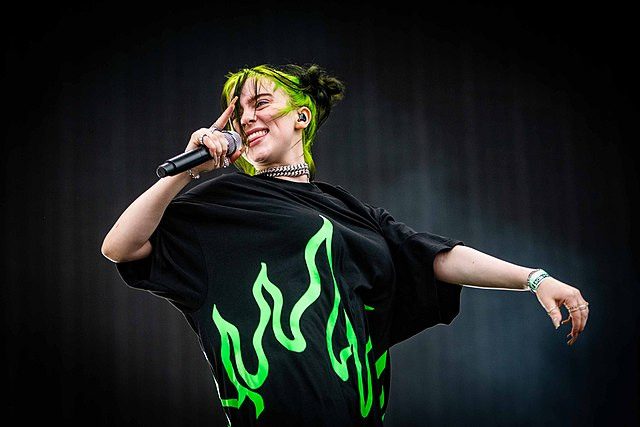
One of the Tongva members responded to the issue by making a statement to the Daily Mail, which stated, “Eilish did not approach our tribe directly on issues of her property. We do appreciate the moment when political leaders give us an opportunity to see the real history of this nation. Hopefully, in future discourse, the tribe can be mentioned directly so that the general public can realize that the larger Los Angeles basin is still Gabrieleno Tongva land. The comment was the nice blend of appreciation and disappointment realizing the strength of visibility and emphasizing the lack of meaningful dialogue.
Once the talk had heated up, there occurred an incident which fueled the fire. The Los Angeles legal firm came out with a public statement of offering to serve Billie Eilish with a eviction notice. The proposal was not entirely legally binding or very likely to be implemented, but it made the news and rekindled the discussion around what responsibility would look like in the context of historical injustice meeting modern property law. Some people also viewed the move by the firm as political theater, whereas others saw it as a provocative measure to draw a wider debate into the field of law.
Legally, the situation is not much different. The modern day laws of California control property ownership, and do not offer any mode of retroactive eviction on the basis of ancestral claims of land. However, legality is not necessarily the same thing as morality and it is the conflict that has made the story remain alive. Skeptics also claim that celebrities who orate about the just need to also be ready to face the ugly connotations of their own privilege. According to the proponents, it is impractical and unjust to expect people to clean centuries of systemic dispossession on their own.
The fact that the Billie Eilish controversy serves to represent a broader cultural moment is what makes it especially impressive. Young people, in particular, the admirers of musicians such as Eilish are speaking out more about decolonization and acknowledgment of the Indigenous people as well as social justice. In California, land acknowledgements that were previously few and far between are now widespread in the public events. But critics have always debated that these gestures of recognition change nothing or are a mere symbolic gesture that relieves collective conscience without creating any disturbance to the status quo.
Eilish herself has not come out publicly to take or decline the eviction notice offer or the criticisms that have been leveled against her property itself. Her silence has been viewed differently. Others interpret it as a tactical decision so that the news cycle can proceed. Some perceive it as a wasted leadership potential especially considering the number of people that she has influence over around the world who are already interested in social and political agendas.
Another question is the question of scale. As much as one mansion has become the center of the outrage, Indigenous advocates usually continue to point out that the problem is more about systemic erasure than one person owning a mansion. Los Angeles and much of the United States was constructed without treaties, payment, or consent on the Indigenous land. The emphasis on a single celebrity can lead to a personalization of a structural issue, which will no longer focus on the policy change, education, and reparative justice that are required in a wider scope.
Simultaneously, it is true that public figures influence the discussions in a manner that is not possible to ordinary citizens. When a celebrity commits a strong political statement, it not only questions the words said but also questions the actions of that person. This is a dynamic that can be unforgiving, but clearly it is an indication of an increasing demand that influence must be accompanied by responsibility. In that regard, the backlash toward Billie Eilish has less to do with hypocrisy and rather with the changing cultural norm.
The revived interest has at least rekindled debates that have been pushed into the back burner by the Tongva community. Visibility is not restitution, but it may open a dialogue which was does not exist. It is yet to be seen whether this moment would become meaningful or degenerate into another viral controversy.
There are numerous questions that remain unanswered by the situation. Are celebrity ethics higher than those of the average householder? Are symbolic gestures the beginning of actual partnerships with Indigenous communities? And how could it be so that societies accept historical injustice and turn it into online outrage cycles?