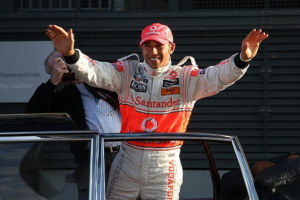
Austin Butler is set to take on one of the most complicated and controversial roles of his career, as he prepares to portray cycling legend Lance Armstrong in an upcoming biographical drama. The project brings together a high-profile creative team and aims to explore not just athletic greatness, but the cost of ambition, fame, and deception in modern sports. With Butler attached in the lead role, the film already signals an intention to treat its subject with emotional depth rather than surface-level spectacle.
The biopic will be directed by Edward Berger, the filmmaker behind the critically acclaimed Conclave, whose recent work has been praised for its restraint, moral tension, and psychological nuance. The screenplay is being written by Zach Baylin, an Academy Award-nominated writer known for King Richard, a film that balanced sporting triumph with personal vulnerability. Producing duties fall to Scott Stuber, alongside Nick Nesbit, with Berger also stepping in as a producer. Baylin, Josh Glick, and Zac Frognowski will serve as executive producers, completing a production lineup stacked with industry credibility.
Austin Butler’s casting feels deliberate rather than flashy. Over the past few years, Butler has built a reputation for immersing himself deeply into transformative roles, often portraying public figures whose inner lives are far more complex than their public images suggest. Playing Lance Armstrong requires precisely that approach. Armstrong is not remembered solely as a champion cyclist or solely as a disgraced athlete. He exists in the uneasy space between inspiration and betrayal, making the role as psychologically demanding as it is physically intense.

The film is not being developed under Stuber’s United Artists banner, as the project predates his recent partnership and the revival of the Amazon MGM-owned label. Instead, the biopic is currently being shopped to studio partners, indicating that it is still in an early but active phase of development. According to industry reports, Stuber has secured Armstrong’s life rights, allowing the filmmakers access to personal perspectives that could shape a more intimate portrayal of the cyclist’s rise and fall.
Lance Armstrong’s story is one that once symbolized human resilience. After surviving testicular cancer in the 1990s, Armstrong returned to professional cycling and went on to dominate the sport in a way that seemed almost mythic. His seven consecutive Tour de France victories turned him into a global icon and a symbol of perseverance. For many fans, especially cancer survivors, Armstrong represented proof that the human body and spirit could overcome extraordinary odds.
That carefully constructed image, however, did not endure. In 2012, the United States Anti-Doping Agency released the findings of a lengthy investigation that concluded Armstrong had used performance-enhancing drugs throughout much of his career. The report described what it called one of the most sophisticated doping programs in the history of sport. As a result, Armstrong was stripped of his Tour de France titles and banned from competitive cycling for life. The fall was swift, public, and deeply humiliating.
What makes Armstrong’s story particularly compelling for cinema is not just the scandal itself, but the prolonged denial that preceded it. For years, Armstrong fiercely rejected accusations of doping, often responding with aggression and legal threats. Teammates, journalists, and former allies found themselves discredited or sidelined. When the truth finally emerged, it forced the public to confront uncomfortable questions about hero worship, accountability, and the pressure placed on elite athletes to win at all costs.
Edward Berger’s involvement suggests that the film will avoid simplistic moral judgments. His previous work demonstrates a willingness to sit with ambiguity, allowing characters to be both admirable and deeply flawed. Rather than framing Armstrong solely as a villain or a victim, the biopic is expected to examine the system that rewarded extraordinary performance while quietly tolerating unethical behavior. Professional cycling during Armstrong’s era was plagued by widespread doping, and the film may explore how that environment shaped individual choices.
Zach Baylin’s screenplay is likely to emphasize character over chronology. His writing has often focused on the emotional consequences of ambition, especially within competitive family or institutional structures. Applied to Armstrong’s story, this approach could reveal how the drive to reclaim physical dominance after cancer slowly blurred ethical boundaries. Success, once achieved, became something that had to be defended at any cost, even when the foundation beneath it was unstable.
From a cultural standpoint, the Armstrong biopic arrives at a moment when audiences are increasingly skeptical of public figures presented as flawless heroes. Recent sports dramas have leaned into complexity, acknowledging that greatness and misconduct often coexist. This shift reflects a broader understanding that human beings are rarely one-dimensional, and that confronting uncomfortable truths can be more meaningful than preserving comforting myths.
There is also the question of public fatigue. Armstrong’s scandal has been dissected through documentaries, interviews, and investigative journalism over the years. For this film to resonate, it must offer something beyond repetition. The creative team’s pedigree suggests that the focus will be less on rehashing known facts and more on exploring emotional and ethical undercurrents. Butler’s performance will be central to that effort, especially in conveying the internal conflict of a man who both believed in his own legend and actively worked to sustain it through deception.
The decision to move forward with this project inevitably raises mixed reactions. Some view any retelling of Armstrong’s story as an opportunity to reopen wounds or rehabilitate a tarnished reputation. Others see value in revisiting the narrative with maturity, acknowledging harm while examining how such figures are created and sustained by public adoration and institutional silence. A well-crafted biopic does not excuse wrongdoing, but it can illuminate how easily lines are crossed when success becomes identity.