Angelina Jolie has never been a person who avoids tough talks. She has over the years been very candid in her speech on grief, motherhood, illness, and resilience, and these topics seem to put many individuals at ease. This time the Oscar-winning actor is opening up again, but this time it is her mastectomy scars and how she feels about them. She has also been quoted in an interview in raw, uncensored words on what remained following her preventive surgery about the scars which were left behind she says, I love my scars because of that, you know, and I am fortunate to be given the opportunity to make a choice to be proactive about my health.
Scars are a thing of concealment to many. Physical reminders of surgery may be incompatible with popular image, which is frequently packaged and sold as perfection in Hollywood particularly. However, Angelina Jolie does not see her scars after mastectomy as damage. Rather, she explains them as an expression of a choice made. According to her, her double mastectomy scars were a decision to be available to her kids. The words are full of the burden of a mother who does not even think about appearances, but presence.
The decision of Angelina Jolie can trace back to 2013 when she publicly announced that she had a mutation in BRCA 1 gene. This is a genetic mutation that predisposes the development of breast and ovarian cancers to a large degree. Her announcement at the time resulted in a world wide discussion on genetic testing, preventive surgery and autonomy of women in their health. A great number of women said that they wanted testing or consultations after her decision was read on. It was a unique situation when the issue of celebrity disclosure crossed with the awareness of the population health.
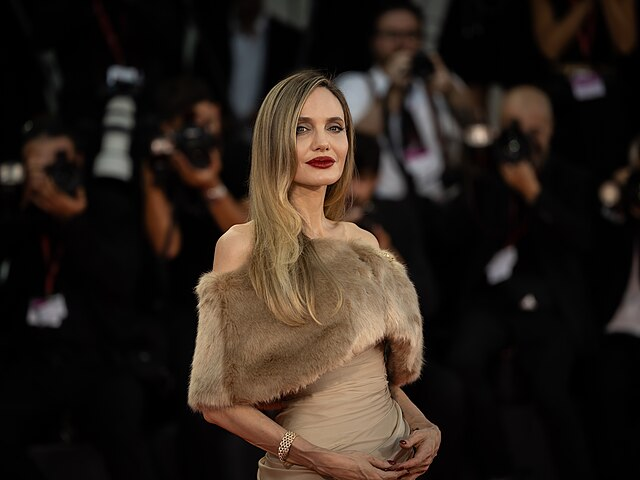
Making a preventive decision to have a double mastectomy is not an easy one. It is a complicated medical choice, which is associated with the consideration of odds, emotional preparedness, surgical risks, and long-term consequences. In the case of a person who is in the spotlight, it is also equivalent to giving up privacy. Jolie was not doing that to seek sympathy, but in the hope that people would know, as she decided to share that journey. Her thoughts several years later seem not so much concerned with the medical realities but with the individual consequences. The operation rescued her in a life-threatening situation, but left conspicuous scars on her body.
Her surgeon, Dr. Kristi Funk, has come out publicly and commended the views of Jolie. In his opinion, Dr. Funk says that hearing Jolie call those scars her choice is a full circle of healing that most of us do not experience. Something is deeper than physical recovery in that phrase. To this end, healing does not only concern injuries mending or stitches unraveling. It is concerning coming to a place where the traces of trauma stop being seen as a loss, but strength.
Scars were also termed by Dr. Funk as visible choice to survive. It is a powerful reframing. Scars may be converted into imperfections in a society that deems beauty to be the absence of imperfections. But medically and emotionally they demonstrate intervention, of action against risk. Scars to breast cancer survivors and those who have a preventive surgery are usually loaded with complex emotions. At the same time, they may reflect fear, release, vulnerability, and gratitude.
When Jolie talks about loving her scars, the topic of the discussion lies not in the aesthetics, but in the agency. She did not depict herself as a casualty of situation. She made it sound like she was a person who considered her risks and took a wise choice. The focus on choice cannot be ignored. The prevention of cancer through surgery is not a chance to many cancer patients. Others do not have access to genetic testing or special care. In her statement, Jolie admits that she is lucky to be able to perform proactively. The fact that she says she is glad to have had a chance to make such a choice is a hint that she realizes that not all people have the same opportunity.
Her words have an appeal at the human level since they are based on motherhood. The framing of the scars as continuity by saying that I opted to have the surgery to stay with my kids gives me the sense of continuity. The spots are not memories of the days when a person was afraid, but the remembrance of the birthdays spent, school events observed, and the days living. The need to spend more time with their children is quite familiar to parents. The concept of having to make a tough choice in a bid to secure the future is something that is relatable even to the non-parenting population.
During the last ten years, the discourse concerning preventive mastectomy in society has changed. The medical workers emphasize that not all individuals can have such surgery but it should be conducted on the ground of personal risk analysis. Familial history, genetic counseling, and personal health are all very vital. Jolie was so open that it was not an indication that her way should be followed by all people. Instead, it emphasized the need to make well-informed choices. Her new remarks in most ways take the story back. The first announcement was aimed at risk reduction. Nowadays, it is all about acceptance and self-compassion.
It is a rather radical act as well when the statement is made that one loves scars. In a business that has image as its foundation, this statement is a threat to limited notions of femininity and beauty. Mastectomy with reconstructive surgery has been greatly developed and most women opt to do it due to very personal reasons. But still despite reconstruction there are scars. This fact reveals the strength of survivorship in that nothing is capable of wiping out vulnerability; it simply changes it as Jolie is keen to name them and claim them.
The responses of the public to her comments have been very positive, albeit the conversations regarding celebrity health revelation may not be a simple matter. There is an opinion that the narratives of celebrities might simplify the choice of medicine. Visibility and representation is seen by others as of great value. The reality must be there in the middle. What cannot be refuted is that the voice of Jolie is influential and the way she wields it is important.
By not being ashamed to talk about her mastectomy scars, Angelina Jolie provides a reminder that not every survival is invisible. It is at times tattooed on to the body. In some instances it transforms the way an individual perceives himself/herself. She says, I love my scars because of that, you know, and I am glad I got the chance to make the choice to do something proactive about my health, and that fact does not eliminate the seriousness of what she has decided to do. Rather, it reapproaches the story of fear to gratitude.