The next-generation artificial intelligence model that Alibaba has officially launched is Qwen3.5, which the company claims is designed in line with what it has dubbed the agentic AI era. This release is not as much of an update to the existing system of the Chinese technology giant. It is trying to reinvent the way AI tools operate in human life and is moving out of chats that are based on conversation instead of systems that can perform complex tasks on their own. The announcement is more than an upgrade of technical nature but a strategic shift in a field of AI that is now becoming very competitive on a global scale.
Qwen3.5 is a new model, which is developed to perform tasks in steps with minimum human participation. The system has brought significant performance–cost efficiency improvements, according to Alibaba. The company says the model will be 60 percent cheaper to run than its predecessor, and will be eight times as efficient as the predecessor in terms of working with large workloads. Pragmatically, this implies a higher processing power with a lower cost of computing, a ratio that business entities and programmers are extremely concerned with. The scalability of AI models can only be as low as the infrastructure cost which means that a reduction in its cost has become one of the prevailing themes in the industry.
The difference between Qwen3.5 and any other similar software lies in what Alibaba identifies as being called as visual agentic capabilities. This model can also allegedly perform actions in both mobile and desktop applications unlike the traditional chatbots who respond according to text prompts. It is to say that it is able to switch between answering a question and performing actions to navigate interfaces, issue commands or workflows. These concepts of AI agents representing the user have not been novel to the technology community, but now firms are scrambling to make the notion a real, practical, and commercial product.
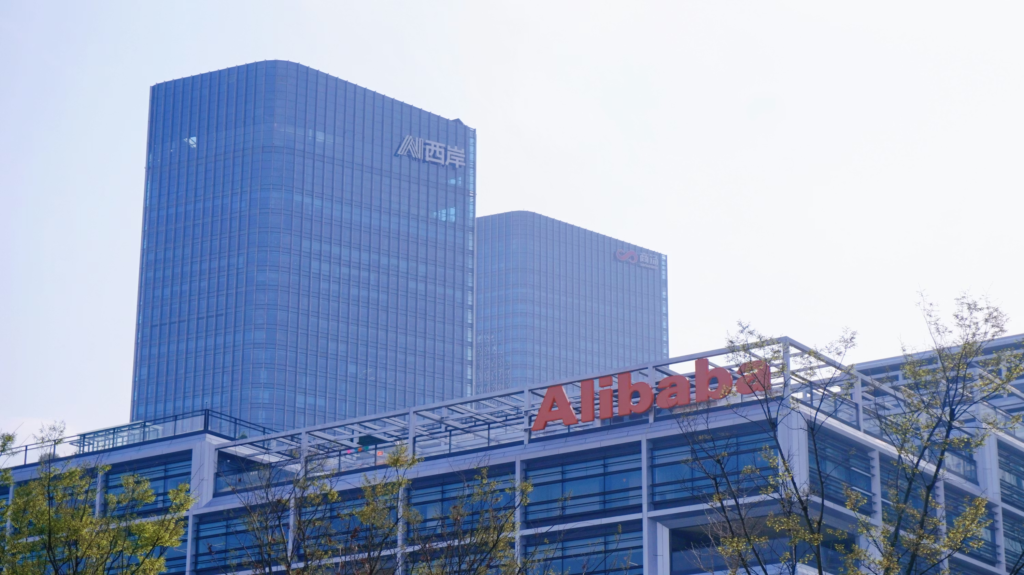
Alibaba underlined this change in its official announcement: Qwen3.5 was developed to support the agentic AI era and allows developers and enterprises to do more with the same compute and establish a new standard of the capability per unit of inference cost. The language is used to show two significant priorities in the current AI market. To start with, there is the need to be fast and productive. Second, efficiency as a factor of computing cost is emerging as a measure of competitiveness.
The release is done at the time of stiff rivalry in the Chinese artificial intelligence industry. The home chatbot market has been expanding at a very high rate, and the expectations of the users are equally increasing at an equal rate. The company, which owns Tik Tok, ByteDance just recently announced the launch of Doubao 2.0, an upgraded version of the chatbot application. Doubao has already the biggest user base in China with a reported figure of 200 million users. Similar to Alibaba, ByteDance had pegged its most recent release on the idea of AI agents that can act more independently. Both companies messaging indicates that the competition is no longer between the smartest chatbot, but the company that will create the most competent AI assistant that can be easily used in the digital space.
The fact that Alibaba is pushing again in the field of AI is also an example of what the previous year taught. The fact that Chinese startup DeepSeek received international attention because of its breakthrough model set the wave of quick reactions of the established players. The unexpected rise of DeepSeek proved that invention might often occur fast and undermine even the vastly-funded tech companies. Alibaba was one of the first large companies to react by launching Qwen 2.5-Max which puts it in the competition. The time seems to have increased the level of concentration of the company in accelerating the development cycles and enhancing its technical positioning.
Funny enough, Alibaba did not refer to DeepSeek directly in its Qwen3.5 announcement. Rather the company made benchmark comparisons that presented Qwen3.5 as better than prior internal versions and also in comparison to a number of top models in the U.S., such as GPT-5.2, Claude Opus 4.5, and Gemini 3 Pro. Benchmark performance has turned into a symbolic arena of the development of AI. Though such measures do not necessarily reflect real world usability, they have an effect on investor confidence and general opinion. In the case of Alibaba, winning standardized tests proves that the Chinese AI can compete on the global scale at the top level.
Alibaba has been paying attention to increasing user adoption, in addition to technical assertions. In early September, the company also ran a coupon campaign, where it was promoting the purchase of food and beverages through the Qwen chatbot interface. Although there were certain technical snags, the campaign is claimed to have boosted active users seven-fold. This experiment unveils a significant fact: AI tools are being incorporated more and more as part of e-commerce ecosystems, and not in a separate chat platform. Alibaba has strength in online retail; hence, it has a natural testing ground on such integrations.
On the industry scale, the focus on the agentic AI represents a wider change. Over the years, conversational AI has focused on the production of text, question answering, and research support. The second step is to empower AI systems with the capabilities to reason and plan in multiple steps and engage with the software tools on their own. This does not only need to have stronger language models but also sound memory, task decomposition, and application-level integration architecture. Those companies that are successful in mastering these layers are potentially rewarded with a structural advantage in the enterprise as well as consumer market.
Meanwhile, grandiose assertions of independence present some serious concerns. The reliability, oversight and accountability of AI systems are becoming increasingly debatable as these systems have the capability to act independently. There will be more efficiency in the businesses, but they will need protection, in case of mistakes and unforeseen consequences. Reduction in cost is appealing, but trust is also a determining factor of adoption. Performance benchmarks will not come alone in the long run hence responsible deployment will also prove to be equally important.
The launching of Qwen3.5 by Alibaba is thus not just a regular product upgrade. It is an indication of a strategic move to win the leadership in a newer era of artificial intelligence. The company is already making advances in China in terms of AI competition by integrating cost efficiency, increased task execution, and integration with the ecosystem, as well as indicating its global intentions.