Taylor Swift has long understood that fame often comes with noise, but not every storm requires her presence. As legal proceedings involving Blake Lively continue to dominate entertainment headlines, Swift has quietly chosen a path of distance and discretion. Despite being pulled into the controversy through the release of private text messages, the global pop icon is reportedly refusing to engage, choosing instead to focus on her personal life and future plans with Travis Kelce.
Those close to Swift suggest her response has been measured rather than emotional. From her perspective, this is not a battle she initiated nor one she intends to fight. While the public fascination surrounding celebrity lawsuits remains relentless, Swift appears intent on protecting her peace. Sources familiar with her mindset indicate she feels indirectly dragged into the situation and sees no benefit in addressing it publicly or legally.
The legal dispute itself stems from a sexual harassment and retaliation lawsuit filed by Blake Lively against her It Ends With Us co-star and director, Justin Baldoni. Baldoni has firmly denied the allegations, later accusing Lively and her husband Ryan Reynolds of intimidation and defamation. His countersuit, however, was dismissed, leaving Lively’s original claims as the central focus of the case. What began as an industry-specific legal matter soon widened when court filings led to the unsealing of personal text messages between Blake Lively and Swift.
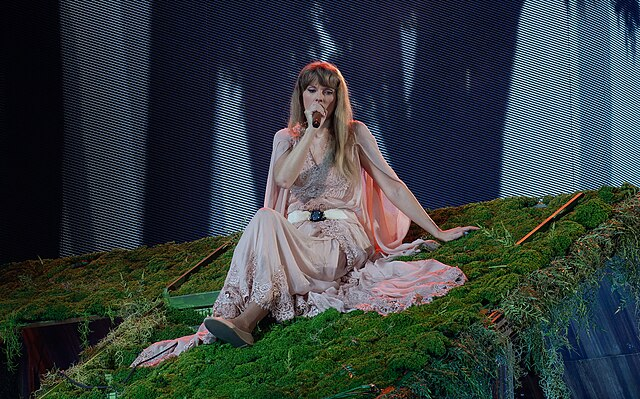
For Swift, the release of those messages reportedly felt intrusive. Known for guarding her private communications closely, she was suddenly positioned as an influential off-screen player in a dispute she never publicly commented on. The texts, while informal and friendly in tone, became fodder for legal interpretation and online speculation, turning years of personal rapport into courtroom subtext.
One particular exchange has been dissected extensively. In a conversation with Baldoni, Lively referred to Swift as one of her “dragons,” phrasing Baldoni’s legal team now argues implied the strategic use of Swift’s influence during the film’s development. The word itself, playful in private context, became loaded once viewed through a legal lens, raising questions about power dynamics in collaborative creative spaces.
Further scrutiny followed revelations from April 2023, when Lively admitted to sharing a revised version of the film’s script with Swift during a pre-production meeting attended by Baldoni. Lively sought Swift’s support in persuading him to accept her creative changes. Swift’s response, captured verbatim in the texts, read, “I’ll do anything for you!!” followed by praise for the script during the meeting. The exchange, while seemingly supportive and enthusiastic, has since been interpreted by outsiders as evidence of behind-the-scenes influence.
The tone of their friendship at that time appeared lighthearted and deeply affectionate. After the meeting, Lively sent Swift an exuberant message saying, “You were so epically heroic today. You making s**t up about me and lenses. And referring to yourself as my doll. This clown falling for all of it … You are the world’s absolute greatest friend ever.” Swift replied with equal warmth, writing, “I WON THE LOTTERY. You are the COOLEST PERSON IN THE WORLD and you like me!!”
Yet friendships, especially those formed under the intense pressure of public life, often evolve. As production challenges and legal tensions surrounding the film increased, the dynamic between the two women appeared to shift. By April 2024, months before the movie’s release, Lively sent Swift a link to the trailer, which featured one of Swift’s songs. Swift’s response reflected a more cautious, strategic perspective: “If Justin was strategic he would be like no Taylor Swift in the trailer because that gives you more power over the film, that’s your ally not his.”
That message, understated but telling, hinted at Swift’s growing awareness of how her name and work could affect professional leverage. It also suggested a subtle recalibration of boundaries, something many high-profile figures eventually learn to do as their influence expands.
By December 2024, as reports of on-set friction dominated entertainment coverage, Lively reached out again, this time with a more introspective tone. She questioned whether her struggles had placed strain on their friendship, writing, “I felt like a bad friend lately because I was such a sad sack who only talked about my own s**t for months.” She continued, “You were generous to not only be the key person there for me during all of it, but also to let me off the hook for being so in it.”
Swift’s reply was honest and restrained. She acknowledged Lively’s feelings, telling her she was “not wrong,” while also downplaying the emotional weight by adding it was “not a big deal.” For observers, the exchange revealed maturity rather than conflict, two adults navigating emotional fatigue in the middle of professional chaos.
In recent months, Swift has been largely absent from the public narrative surrounding the lawsuit. Instead, she has been seen spending time with family, close friends, and her fiancé, Travis Kelce. Reports suggest wedding plans and personal milestones have taken priority, a reminder that even global superstars eventually narrow their focus to what feels grounding and real.
The situation has also sparked broader conversations within the entertainment industry. When private messages become public evidence, where does personal loyalty end and professional responsibility begin? The Swift-Lively texts highlight how easily informal support between friends can be reframed once legal stakes are involved. They also underscore the delicate balance celebrities must maintain between authenticity and self-protection.