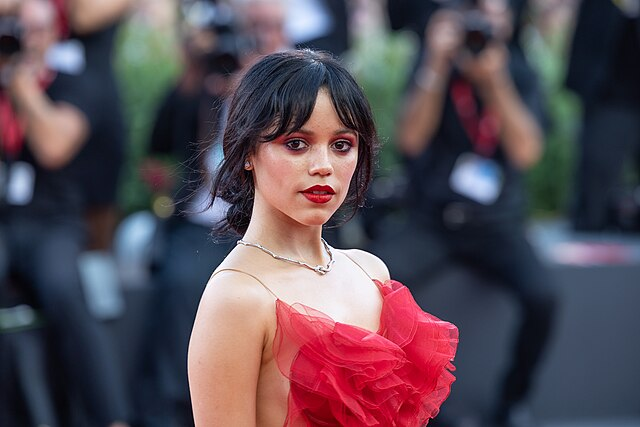
Jenna Ortega‘s latest thoughts on AI spread around the Marrakech Film Festival like a quiet but strong wind, bringing both caution and promise. The actress, whose performances are typically full of real emotion, was honest about how she felt about the growing use of AI-generated content in movies and TV shows. Her main point was clear: she wants people to get tired of entertainment generated by machines and rediscover the depth, unpredictability, and compassion that only actual creators can provide. Her comments came at a time when the entertainment industry is dealing with issues that seem both futuristic and very intimate.
When people talk about technology and art, it’s easy for the discourse to turn into vague ideas or shiny forecasts. That didn’t happen to Ortega. Her voice shook like someone who loves what they do and is afraid of losing it. She thinks that soon viewers will be overwhelmed by the amount of AI-generated images, scripts, and performances. She said that the industry might be “taking things too far,” which is something that has happened many times in human history when new ideas come too quickly. She talked about the fear that many artists have that something old and beautiful could be drowned out by the sound of algorithms.
At the festival’s jury news conference, she was very clear about what was bothering her. “There is really charm in the human condition,” she said, which seemed like a protective hand over the heart of storytelling. Her remark was not a yearning for the past or an aversion to advancement. It was a reminder that art comes from real life, faulty intuition, and the emotional connections that artists and their audiences have with each other. She doesn’t think that the anxiety surrounding AI is just about job security or changes in style. It is about whether we might unknowingly trade something soulful for something that works better.
She went on to say that society can readily accept change without thinking about what it will mean. “Humans tend to go too far when they look back at history. It’s really easy to be scared. I know I’m in a really uncertain time right now. It seems like we’ve opened a Pandora’s Box. Her statements had the weight of someone who has seen both the magic and the problems that technology can cause. There was no drama or terror; just a steady and honest truth.
Ortega’s worries aren’t just thoughts. AI-generated scenes, trailers, character recreations, and even whole story sequences have been shared a lot on social media over the past year. Some have been amazing, while others have been strange. A well-known example was an AI-generated retelling of an old story with very modern objects, which made people laugh and feel uncomfortable online. These instances show us something important: AI can copy, mix, and remix, but it can’t feel. It can make things almost perfectly symmetrical, but it can’t deal with doubt. It can come up with thousands of ideas, but it can’t feel those brief flashes of inspiration that often lead to great stories.
Ortega cares a lot about this difference. “AI can’t do everything, and yes, there are beautiful, hard blunders that a machine can’t make. A computer doesn’t have a soul, so we can never connect with or understand it. After she said that, the term “beautiful, difficult mistakes” stuck with me for a long time. Anyone who has ever tried to make something, whether a sketch, a poem, a movie, or even just a moment of connection, knows that brilliance frequently comes from the rough edges. That’s where people breathe.
As the talk deepened, Ortega revealed a vision that felt surprisingly hopeful despite her fears. She foresaw a future when audiences feel weary from devouring what she characterizes as mental “junk food,” manufactured not out of experience but automation. “I don’t want to assume for the audience, but I would hope it gets to a point where it becomes some sort of mental junk food, AI and looking at the screen, and then suddenly we all feel sick, and we don’t know why, and then that one independent filmmaker in their backyard comes out with something, and it releases this new excitement again.” The image she painted was almost poetic — a fatigued world rediscovering its thirst for authenticity through a modest but strong spark of human imagination.
Her metaphor resonated because it reflected a pattern we’ve seen before. When overproduced trends dominate the market, people automatically seek toward something authentic, something handcrafted, anything that has the signature of an individual’s difficulties, interests and views. Creativity acts like soil; it blooms when touched by actual hands.
Listening to Ortega’s statements, it becomes evident she is not terrified of AI itself. She is afraid of a world that forgets how important it is to be flawed, creative, and very human. Her concerns match those of many artists and filmmakers who stand at a crossroads. They see AI’s promise to assist, refine and invent, but they also feel the unpleasant shadow it casts over the fundamental heart of storytelling. For creators, the fun is frequently in the messy process: the rewrites, the times of doubt, and the startling breakthroughs. Machines can copy results, but not the paths that lead to them.
Her comments also show a bigger societal picture. People who watch may also want work that feels real, emotionally rich, and honest. As it gets easier to make entertainment on a large scale, its meaning could fade. Ortega thinks that people will eventually feel that absence, even if they can’t put a name to it right away. It could show itself as a vague ennui, a subtle dissatisfaction, or a desire for something that seems really alive.
She hopes that these impulses will bring people back to stories that were made with purpose and openness. The amateur filmmaker she imagines working quietly in a garden is more than just a person with a camera. It shows how strong the human imagination is. It represents every creator who keeps asking questions that machines can’t answer, who seeks for feelings that can’t be measured, and who makes art out of joy, sadness, curiosity, and amazement.
Ortega’s thoughts encourage a balanced view. AI can be a great partner, but it can’t remember things for us, hold our contradictions, or give us a sense of what it means to be human. Technology may speed up the process of making things, but it can’t make meaning. We also play a part as viewers. The stories we choose to watch, like, and support will change the way stories are told in the future.